Workshop on making ink from plants
In our workshops thus far, we have looked at plants and their medicinal benefits in manuscripts; their visual representations in herbals; stylized plants in ceramics and manuscript illumination; as well as symbolic associations of plants in early modern paintings from India and Iran.
Last week, we looked at some Islamic manuscripts at the UL, examining both the content as well as their materiality. Kristine Rose-Beers was walked us through the plants in the dye garden upstairs (see below post), which was a fantastic segue into our workshop with Joumana Medlej this week. Joumana is an artist-scholar whose work integrates historical artistic practices. In addition to working with early Arabic calligraphy, she has also translated and recreated inks from historical recipe books. The goal of this hands-on workshop was to bring a different perspective in thinking about plants, becoming aware of their material presence in the manuscripts we have been studying.
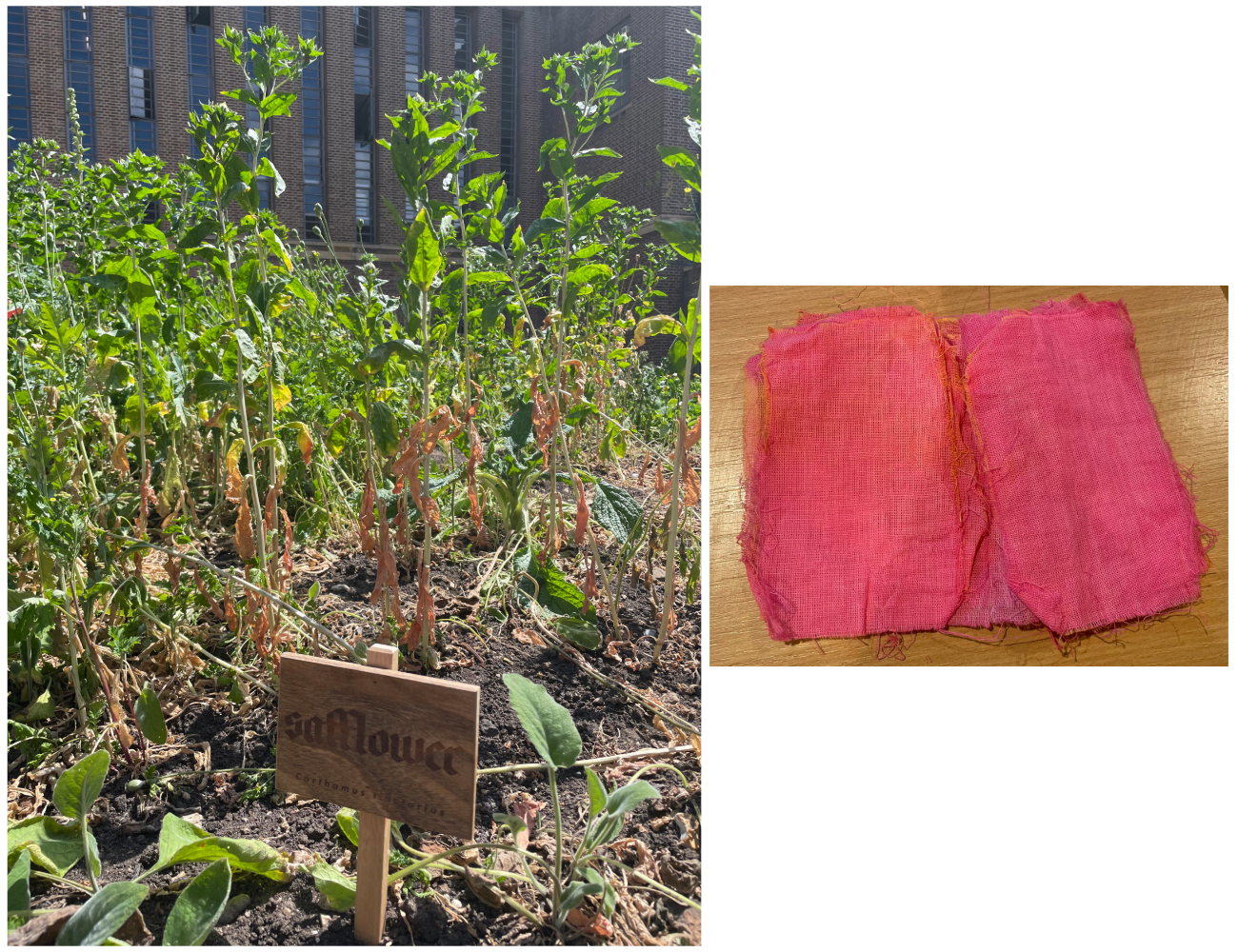
(Left) Safflower at the University Library Dye Garden
(Right) Cotton dyed in safflower
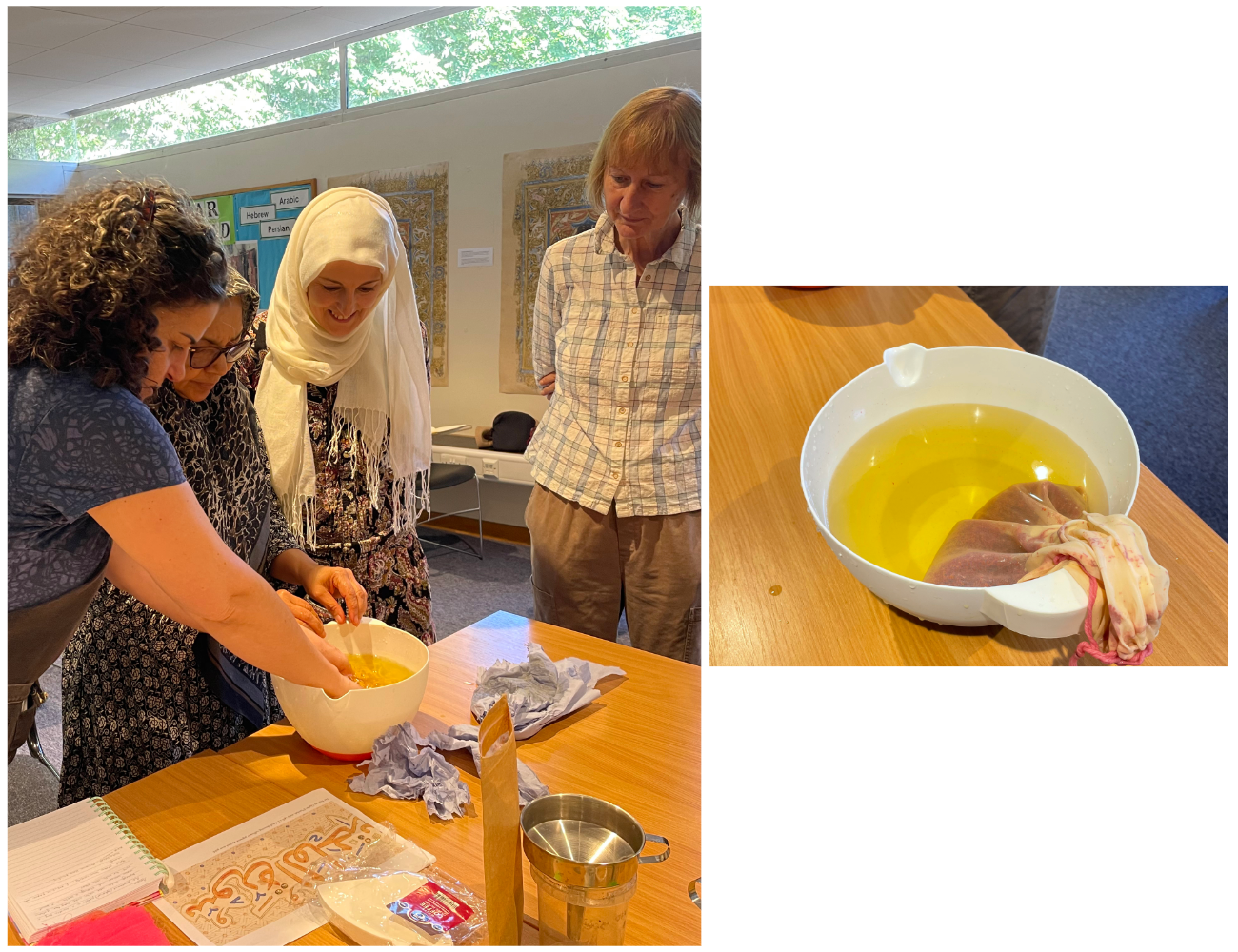
Saffron flower extraction process
With Joumana, we created four plant-based inks that were incorporated in Islamic manuscripts: safflower, saffron, pomegranate, and oak gall. We started with safflower as creating this ink took the longest time. We had an opportunity to see the safflower plant in the UL dye garden last week, so it was particularly exciting to work with this plant. Safflower (al-‘uṣfur in Arabic; carthumus tinctorius in Latin) produces a beautiful reddish color when used on a cotton textile. On silk, the garment will often retain the yellow, unless the safflower dye has undergone the lengthy extraction process. In our short time, we attempted to work through this extraction, squeezing the yellow from the petals in order to attain the coveted red hue, the “jewel” of the safflower. After a process of filtration, we were all dazzled by the pinkish red that we extracted in a few short hours. This pigment was used as part of the illumination of the monumental Qur’an of Sultan Baybars produced in Cairo between 704-5 AH/1304-6 AD during the Mamluk period.
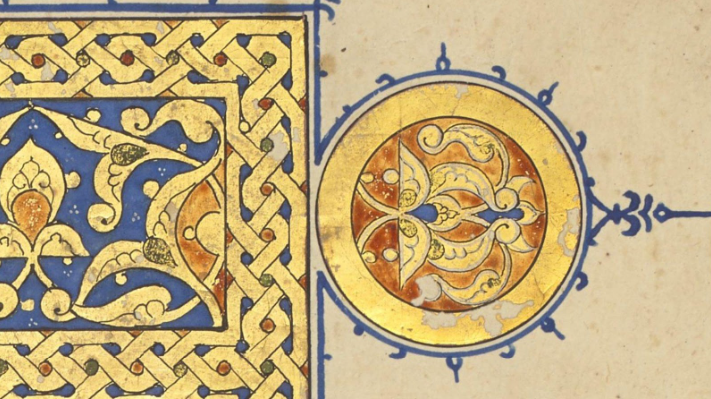
A 14th C Quran manuscript of Sultan Baybars showing the safflower pigment applied over gold. British Library Add MS 22406
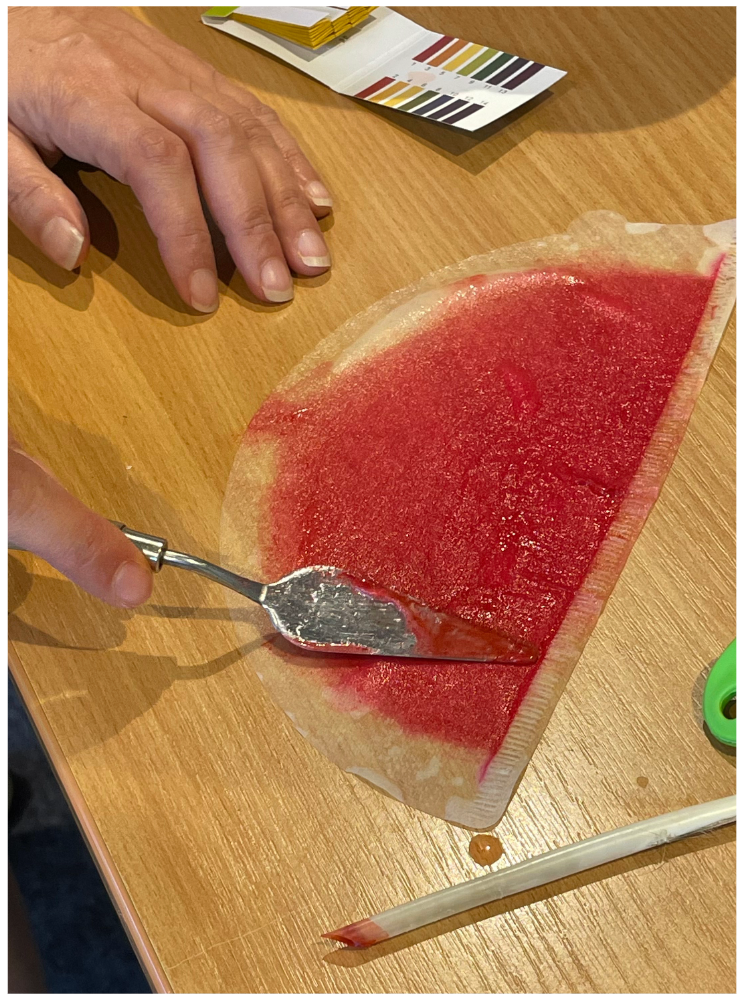
At last, the “jewel” of the safflower!
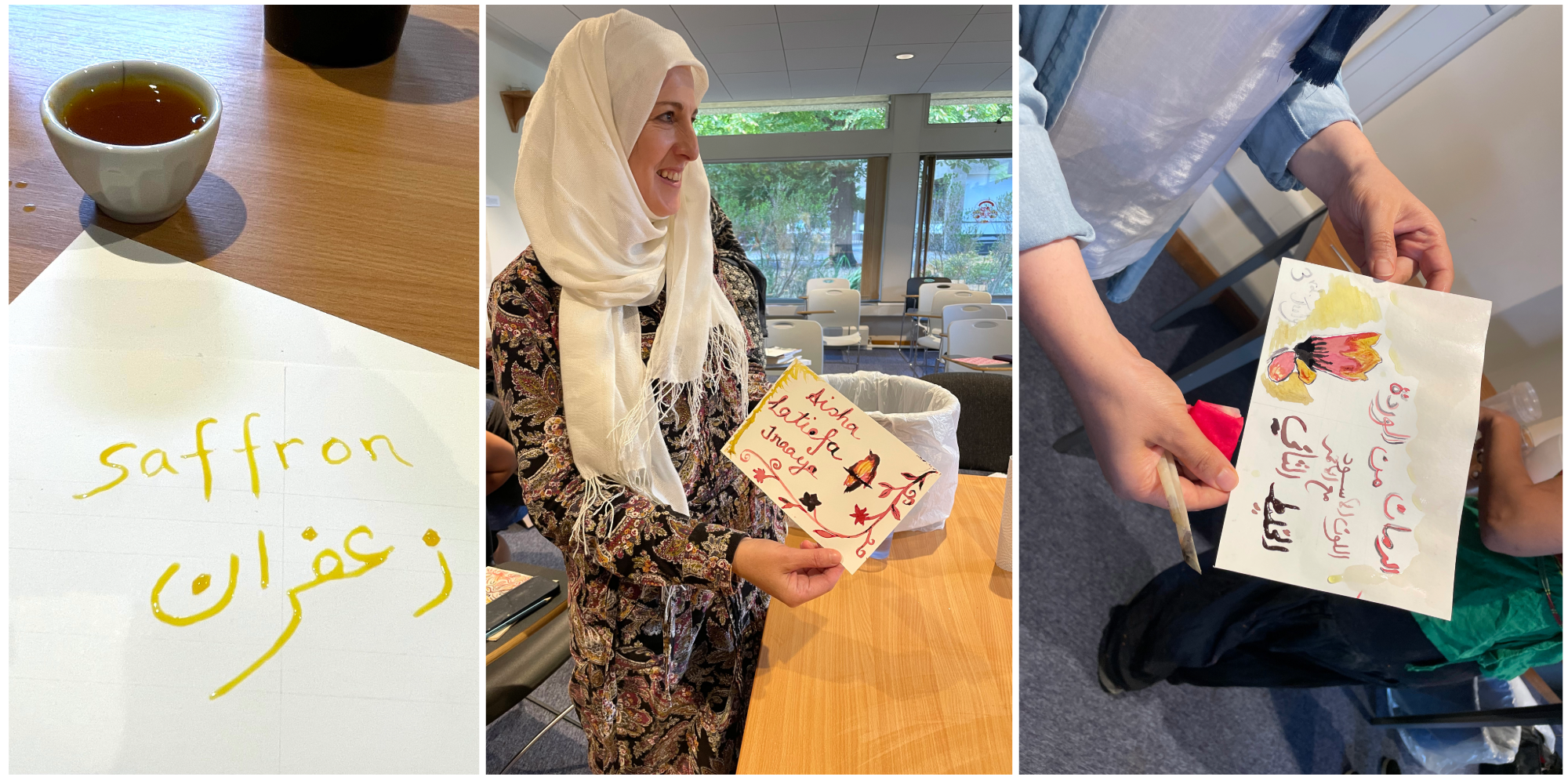
Next, we created a brownish-black ink made of oak galls (‘afṣ or kuḥl al-balūṭ). These small round balls grow on branches and twigs of oak trees and are concentrated with tannin. After crushing and boiling the oak galls with gum arabic, we added vitriol that magically resulted in a beautiful black ink for us to play with. For pomegranate (rumān) ink, we created the pigment using dried pomegranates with a pinch of alum, roughly following the recipe of the 13th C Andalusian master, Abu Bakr Muhammad al-Qalalusi. Pomegranate is one of the plants mentioned in the Qur’an and we have seen stylized depictions of the fruit in some ceramics at the Fitzwilliam Museum as well. We also experimented with one final ink, saffron (za‘afrān in Arabic; crocus sativus) for a bright yellow colour, stemming from the recipe book of al-Mu’izz ibn Badis (d. 1062 CE) titled ‘Umdat al-Kuttāb (Book of the Staff of the Scribes).
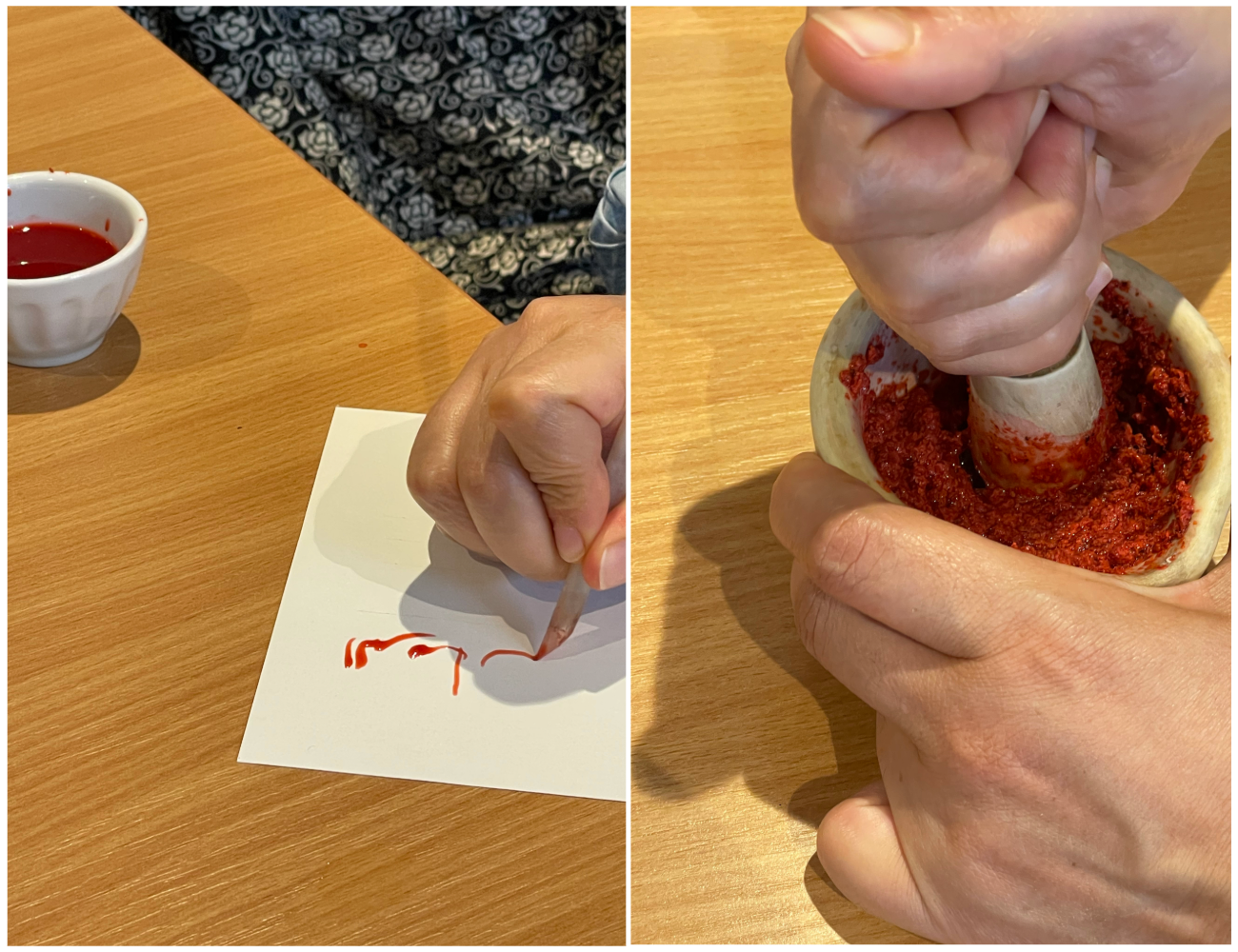
(Left) Calligraphy with pomegranate ink
(Right) Grinding up the pomegranate mixture
As the saffron was boiling, its aroma lingered in the room and we immersed ourselves with the inks, using quill on paper. Some of the participants were even more creative, mixing a few of the inks to see how they appear on the paper. This workshop brought to life the fact that plants were not only instrumental for human health but also harness human creativity.