
Fitzwilliam Study Room
Ceramics and Illustrated Manuscripts
What are some of the botanical plants used in art objects?
Do these botanicals appear as central to the design of the object/manuscript or are they merely decorative?
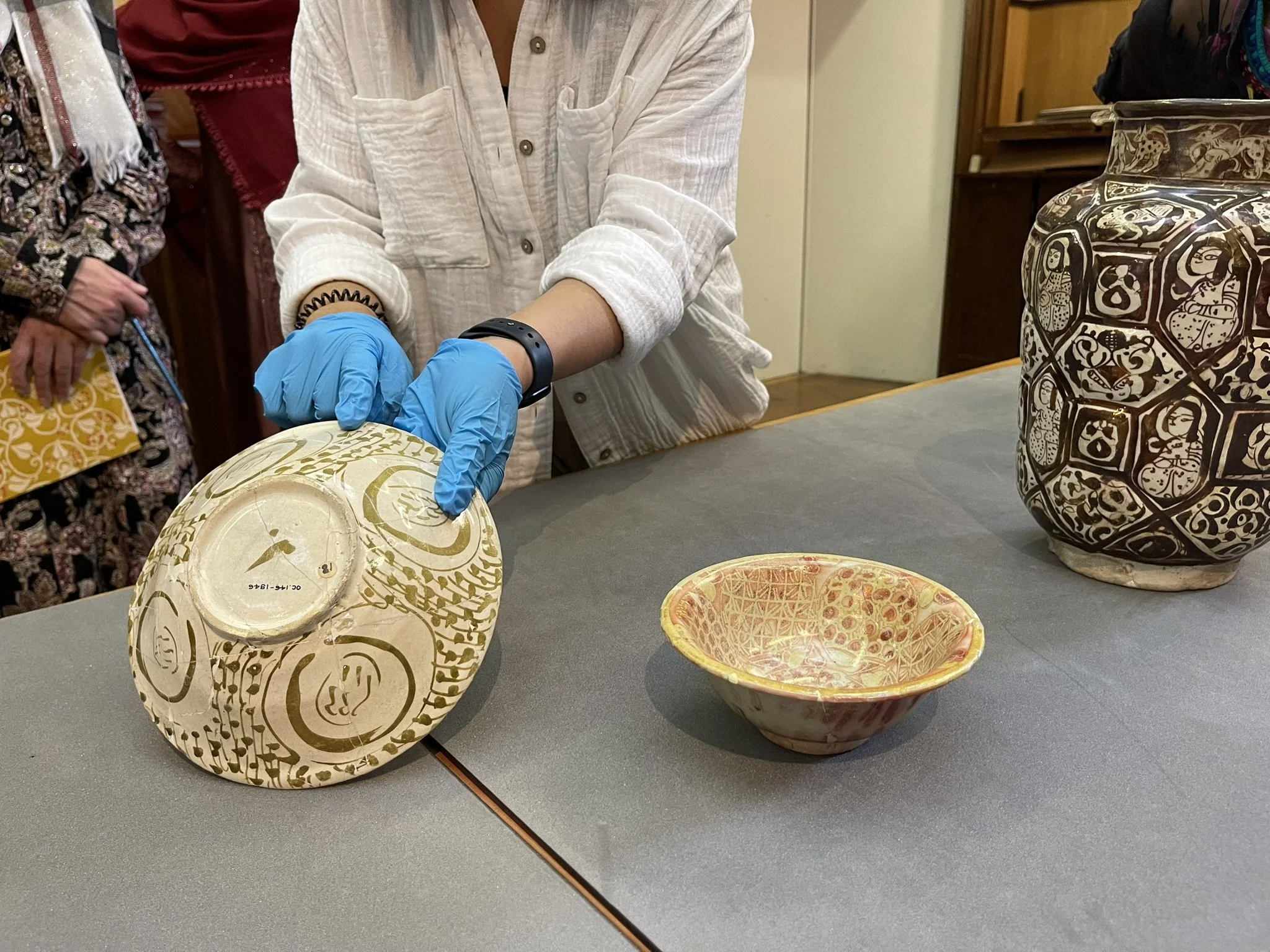
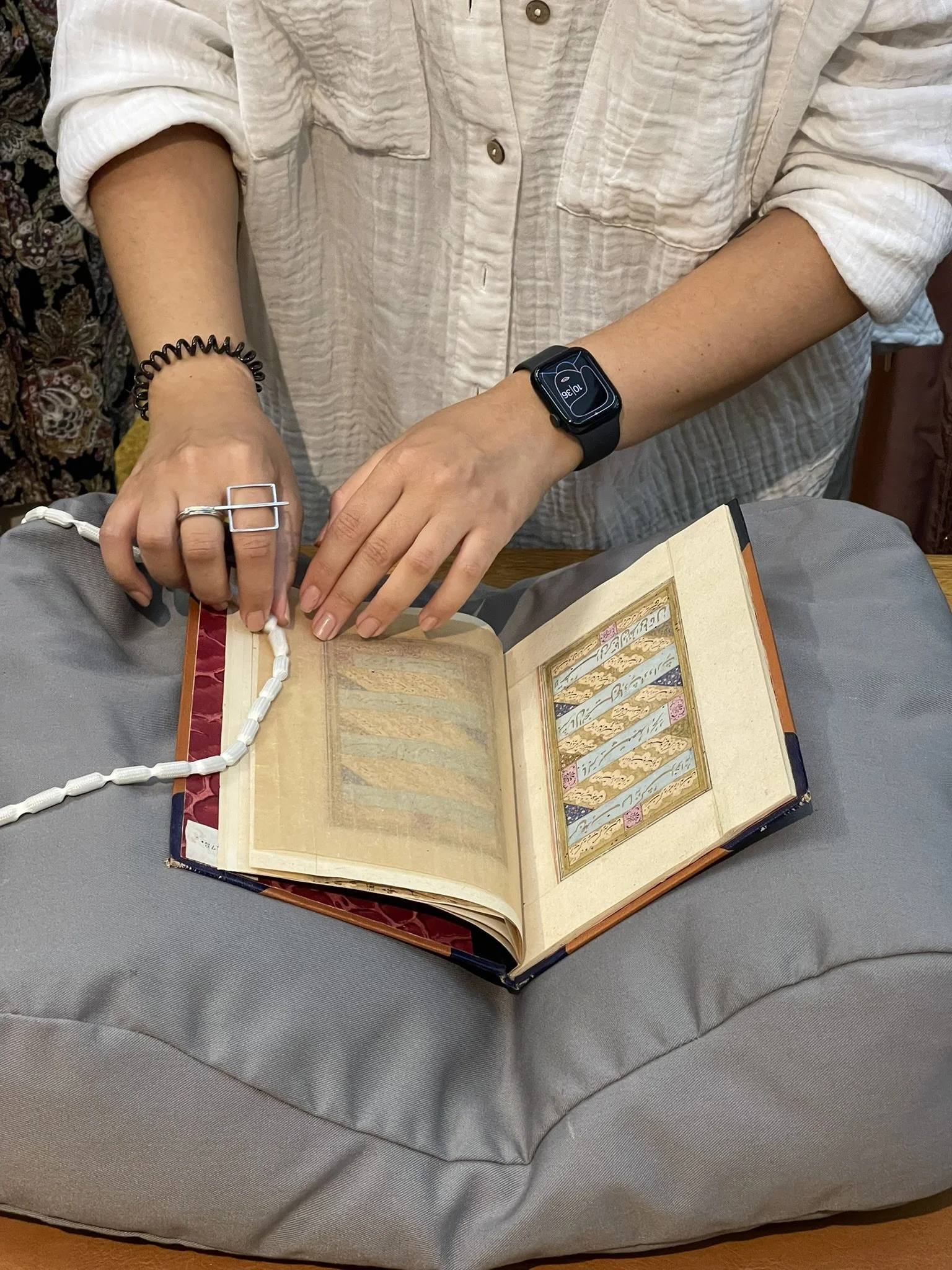
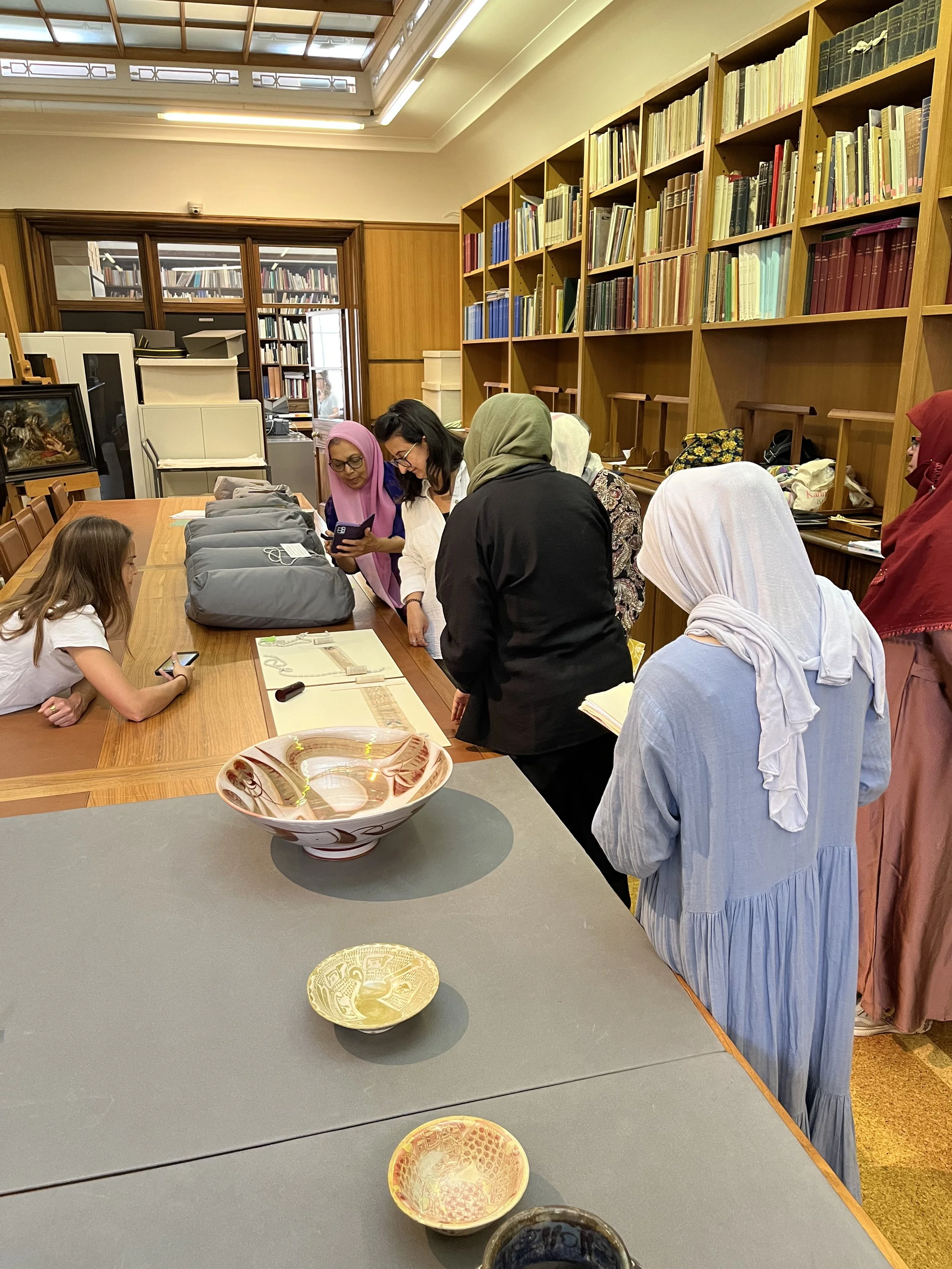
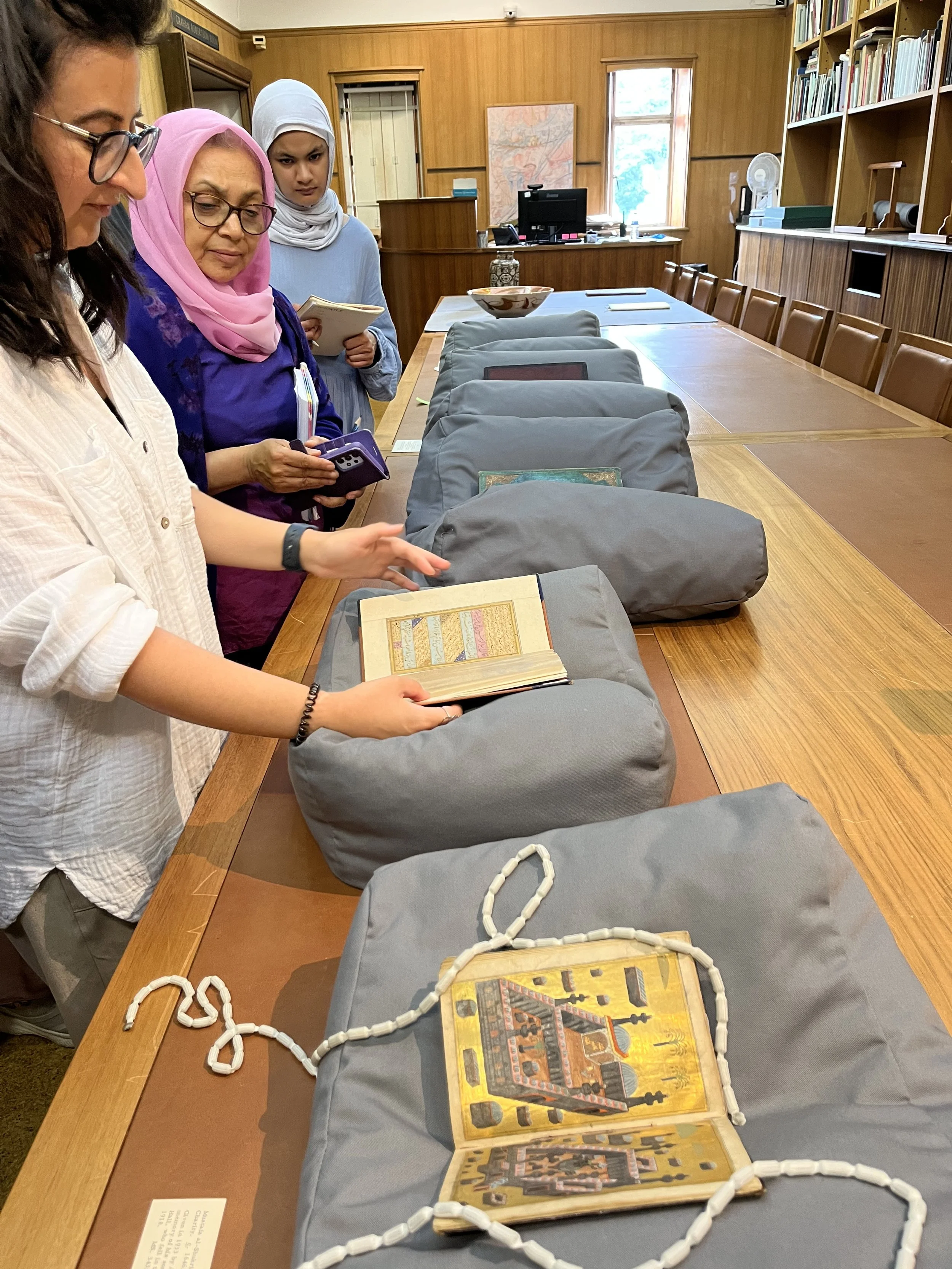
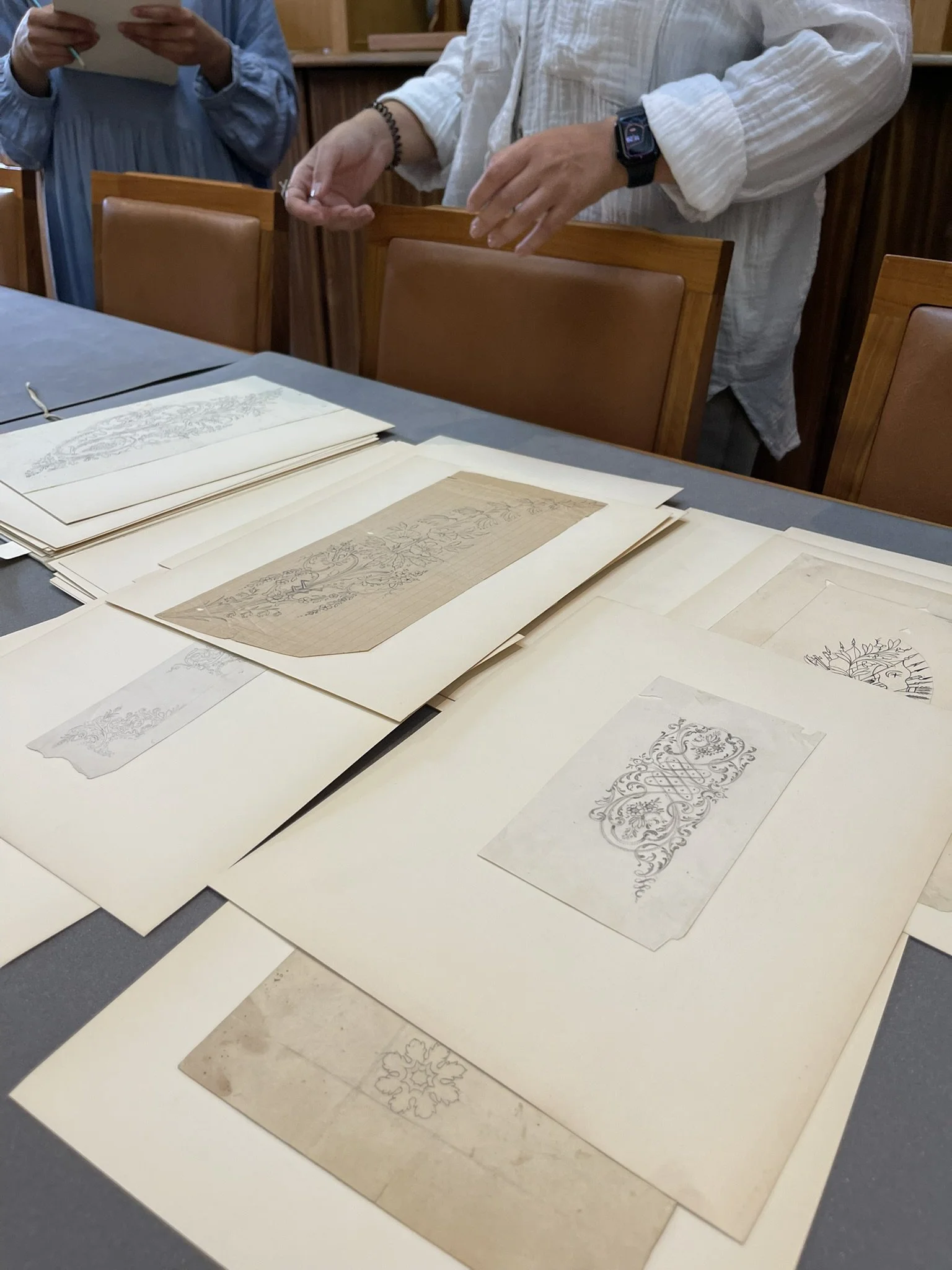
This visit allowed the participants to examine some of the ceramics we discussed in our gallery visit. We looked at closely at several lustre bowls from ‘Abbasid Iraq as well as a contemporary recreation by the British ceramicist, Alan Craiger-Smith. We also examined several Arabic and Persian manuscripts, focusing on the botanical elements in text and the painted page.
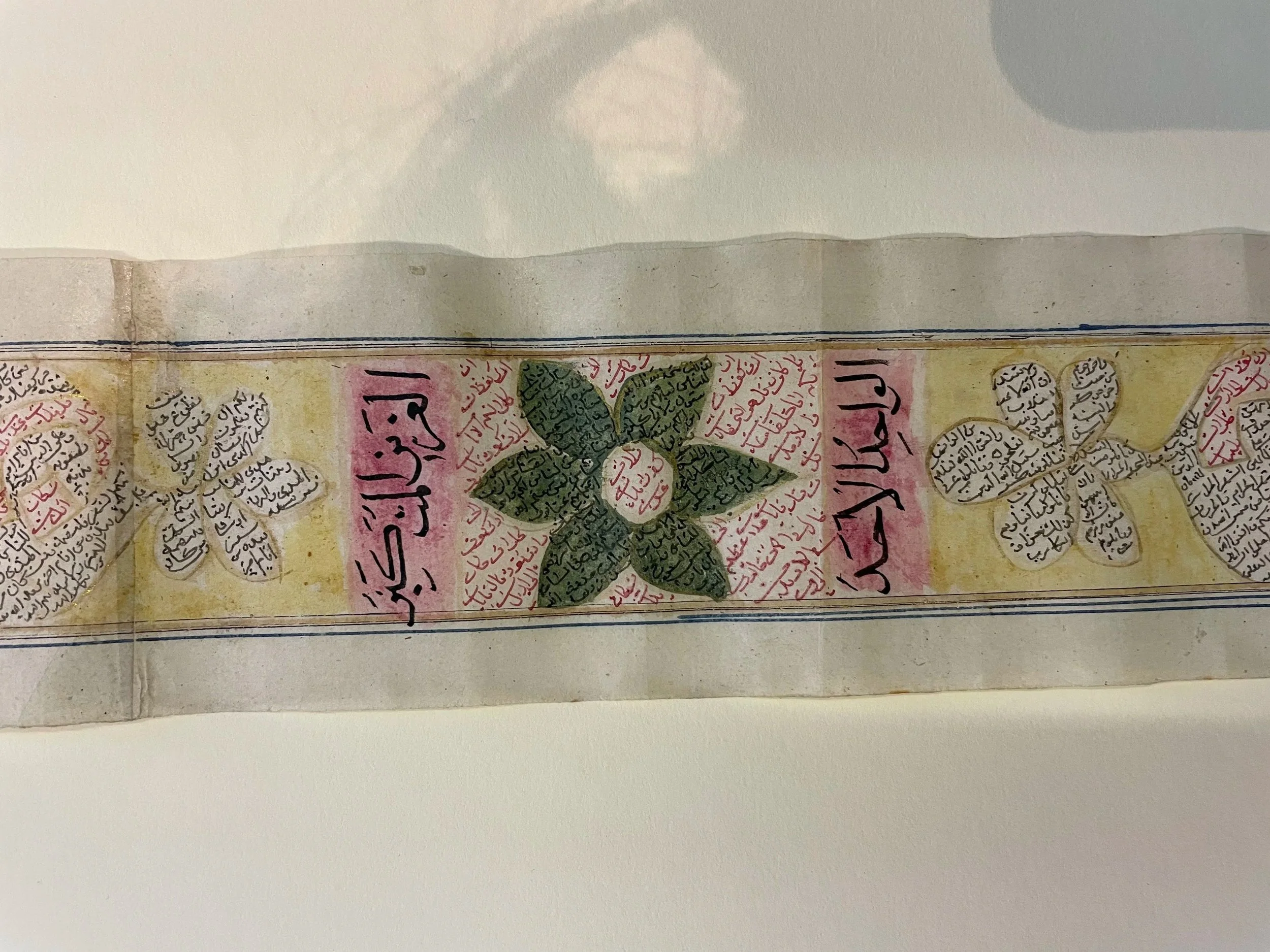
Two objects were pivotal in our discussions: the Dala’il al-Khayrat (Proof of Good Deeds) with images of Mecca and Medina that highlight the significance of the date palm tree; and the Qur’anic scrolls with verses inscribed inside leaves and flower petals.
List of manuscripts
-
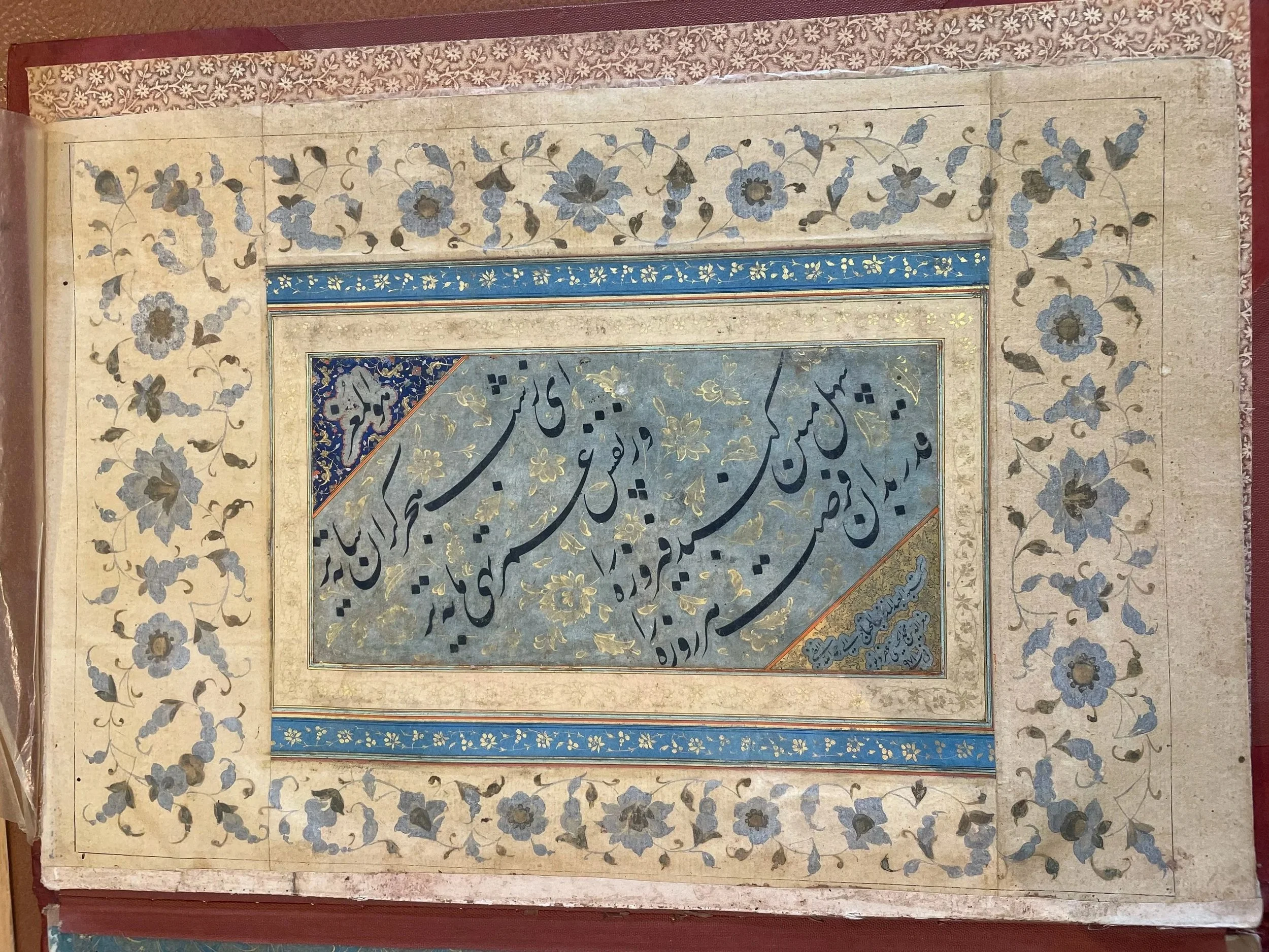
MS 263-1949 Album of calligraphy, Persian
-
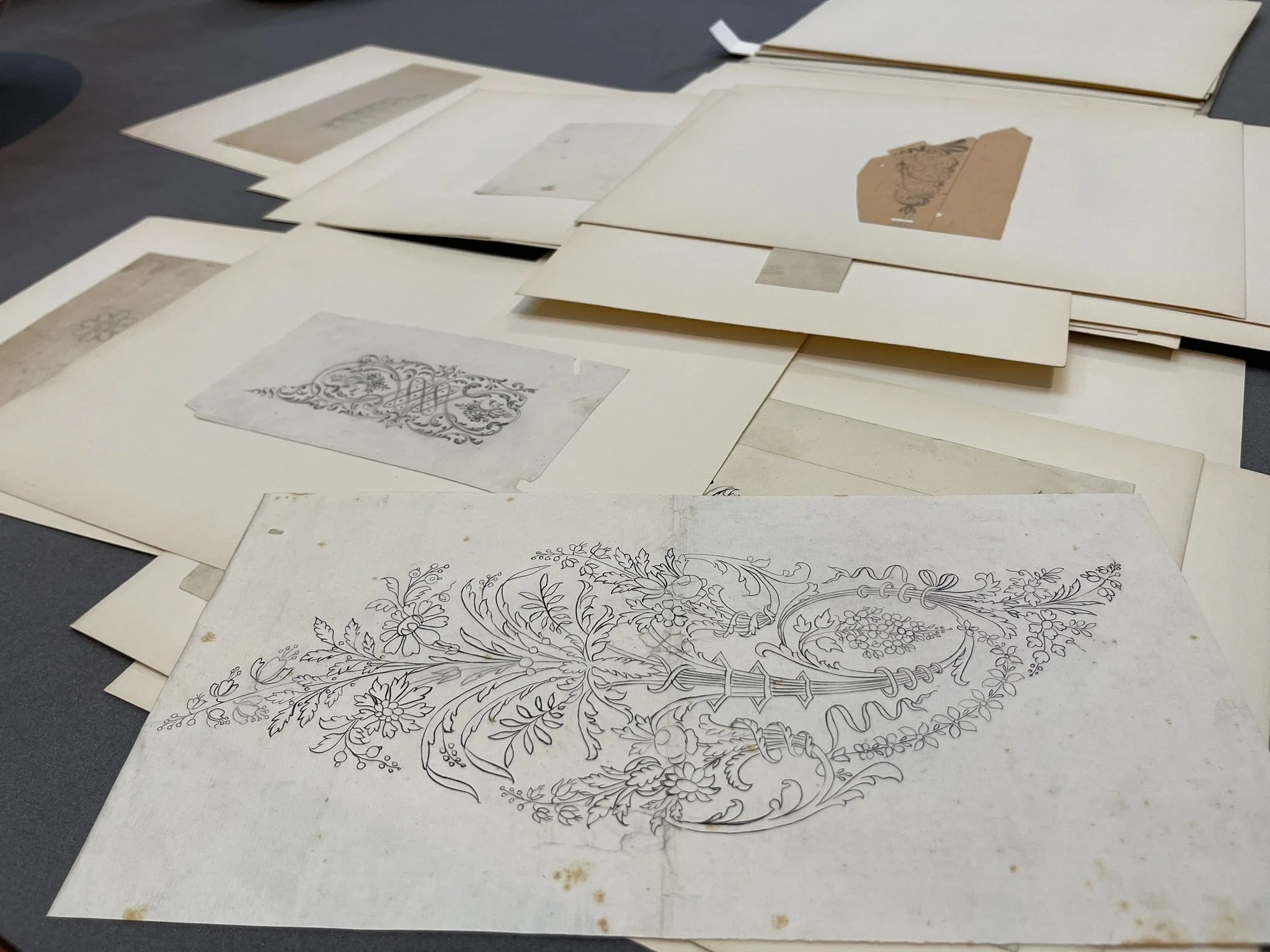
MS 314 Stencils and sketches for decorating Turkish manuscripts and bindings
-
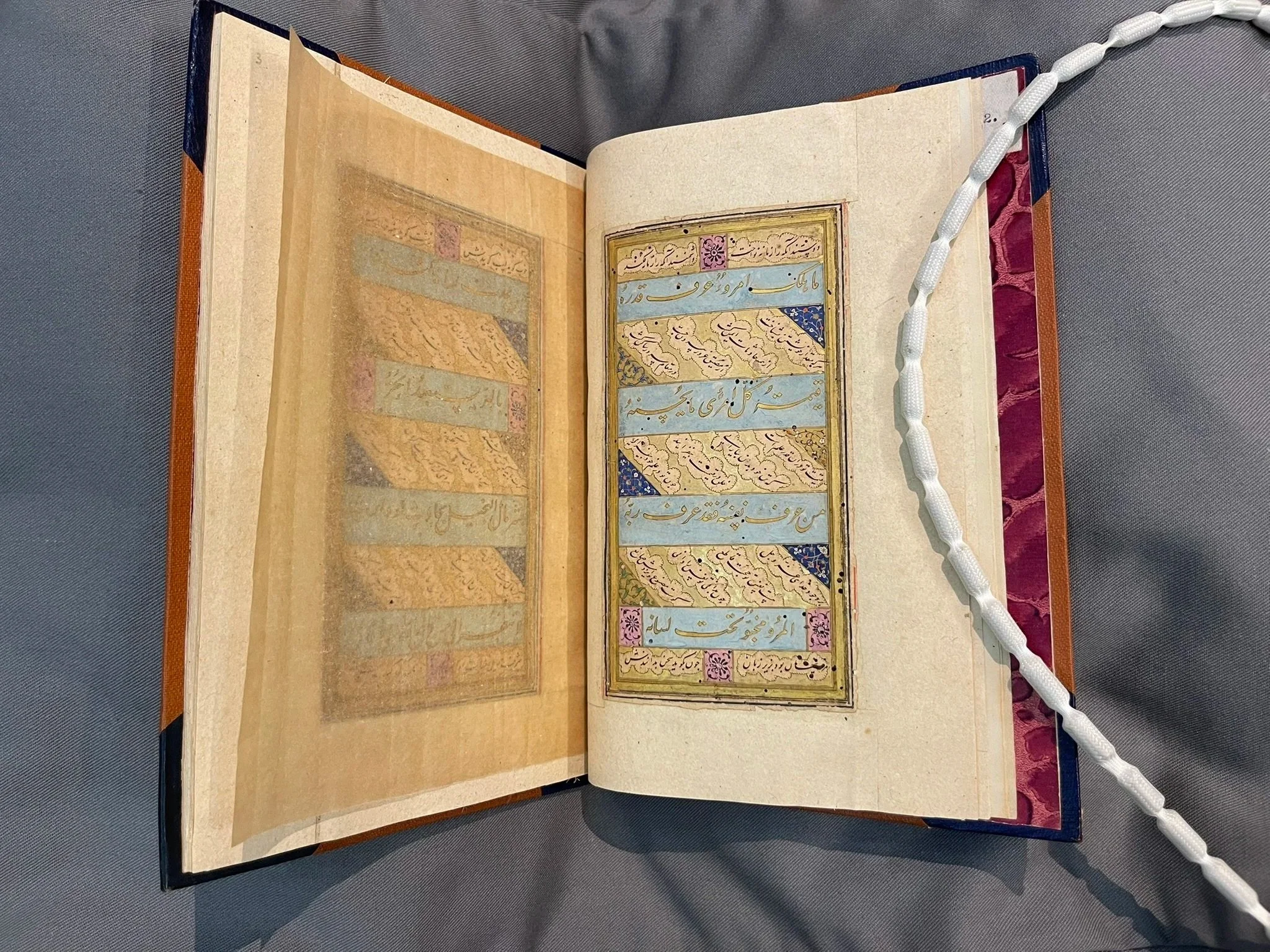
MS 23-1948 Mi’at Kalimah or One Hundred Sayings of Imam Ali, 1524-5 CE
-
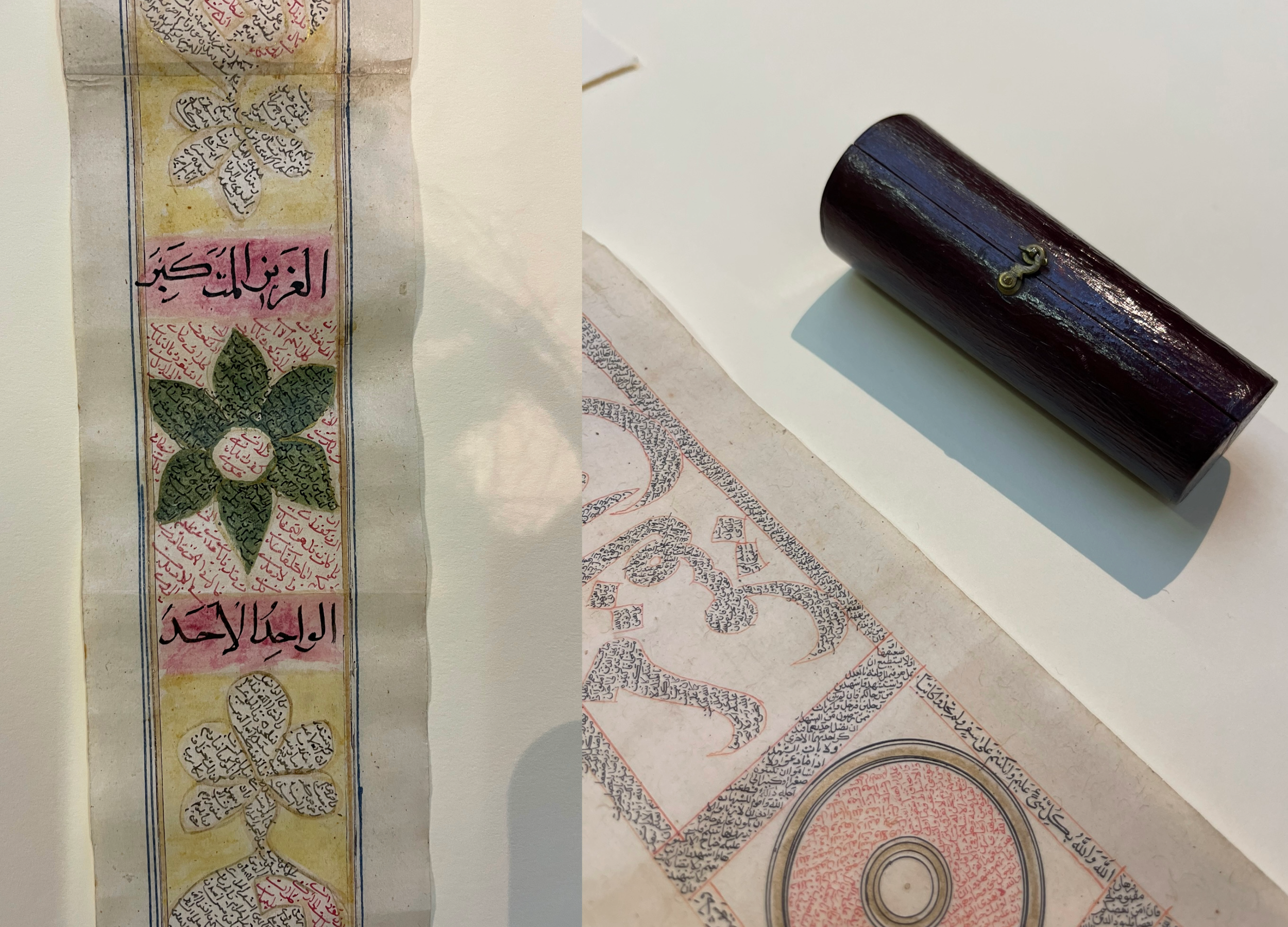
MSS 233 & MSS 234 Qur’an scroll, 18th or 19th C
-
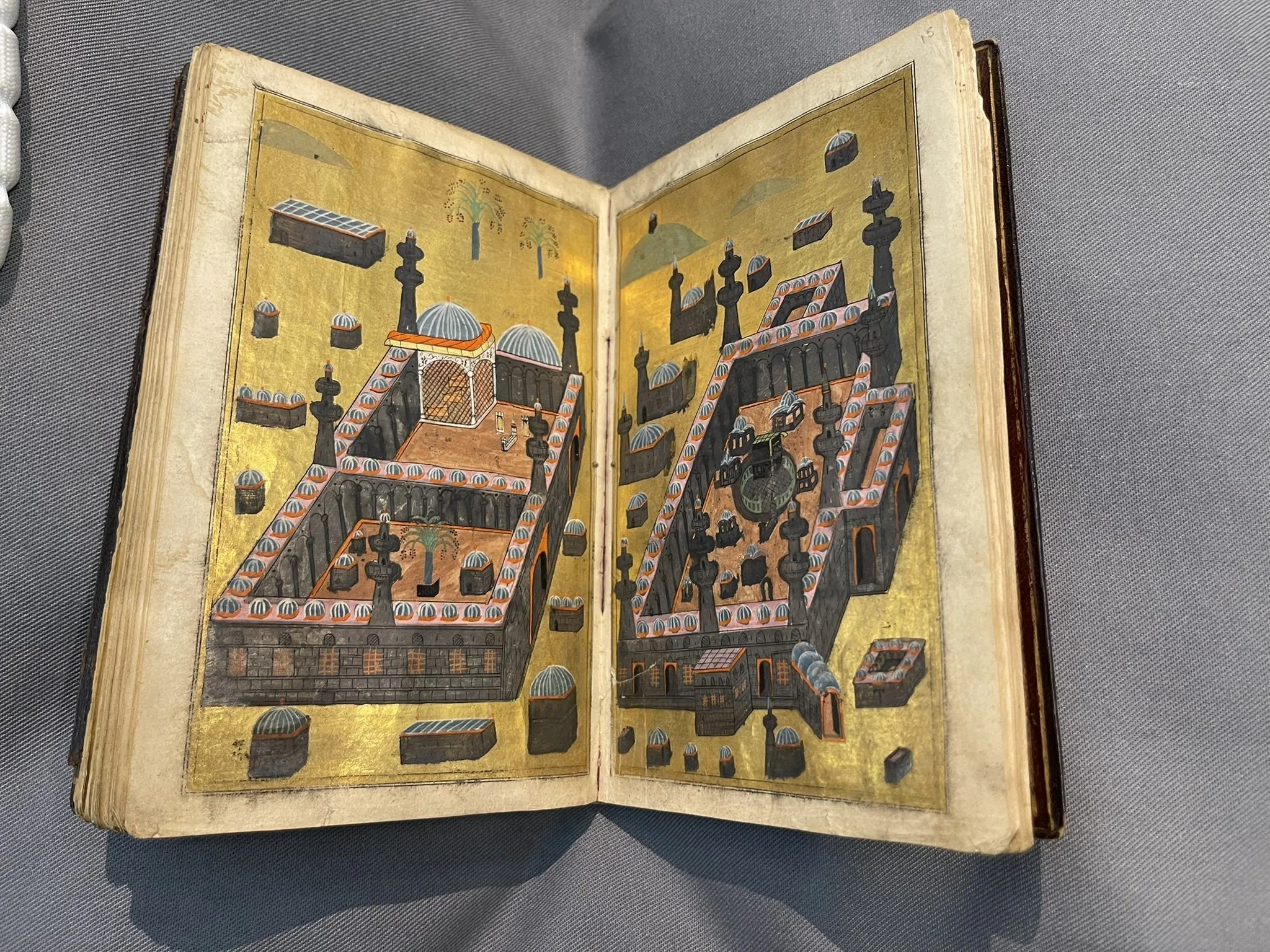
MS 343 al-Jazuli’s Dala’il al-Khayrat (Proof of Good Deeds) by al-Jazuli, dated 1747-9 CE
-
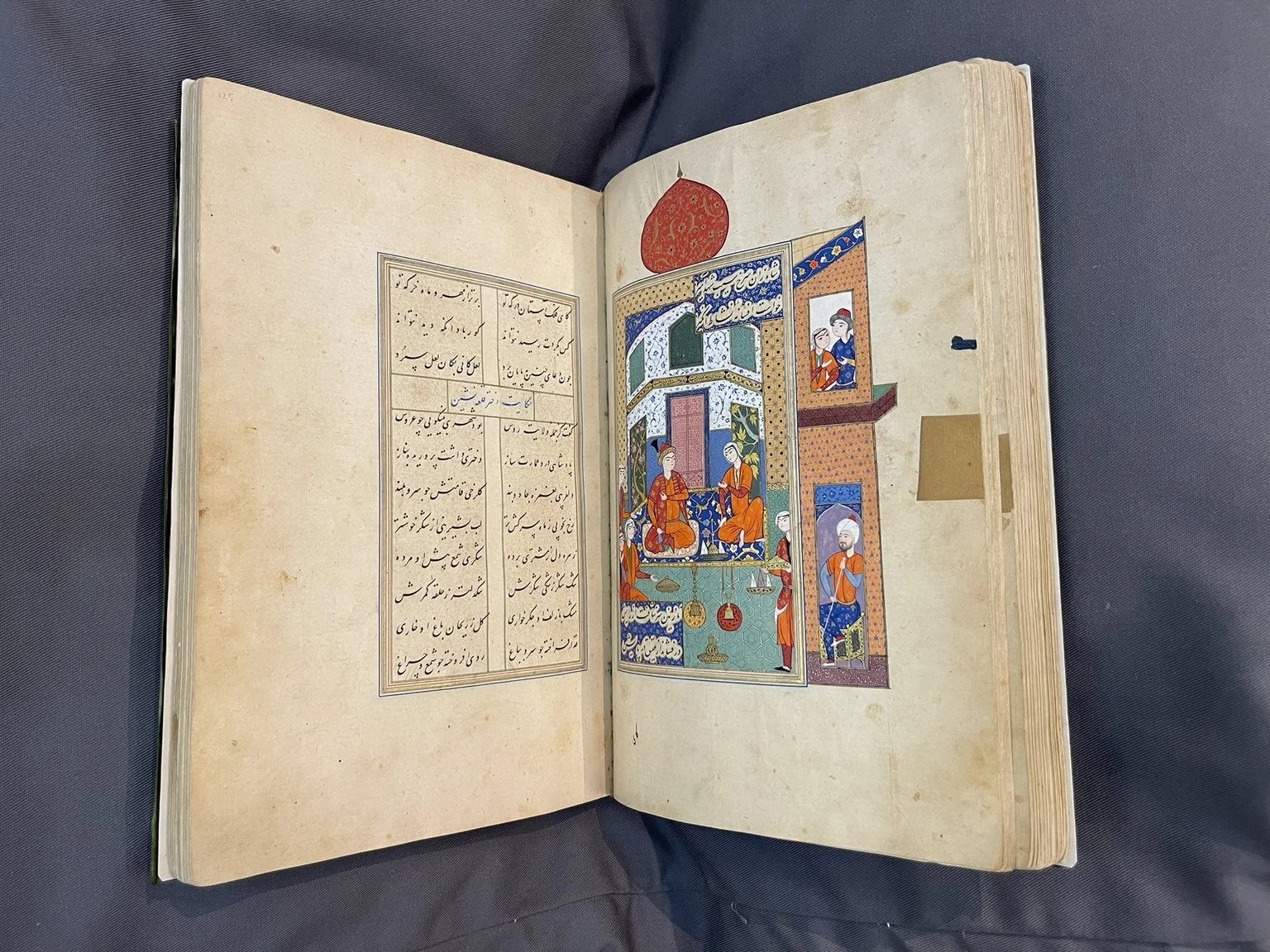
MS 18-1948 Nizami’s Haft Paykar (Seven Domes/Beauties) by Nizami, 1571 CE
-
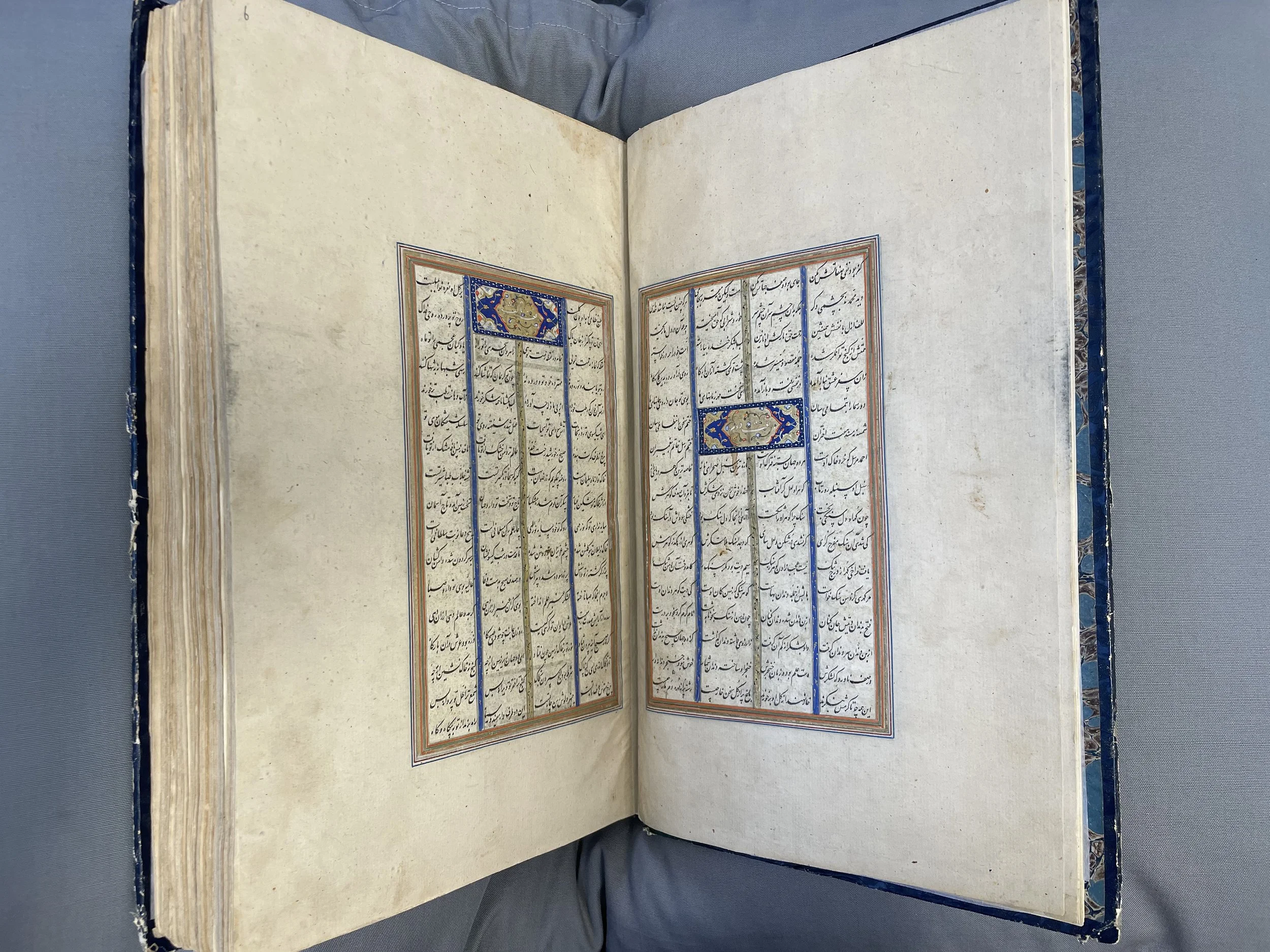
Khamsa (Quintet) of Nizami, 17th C
List of ceramic objects
-
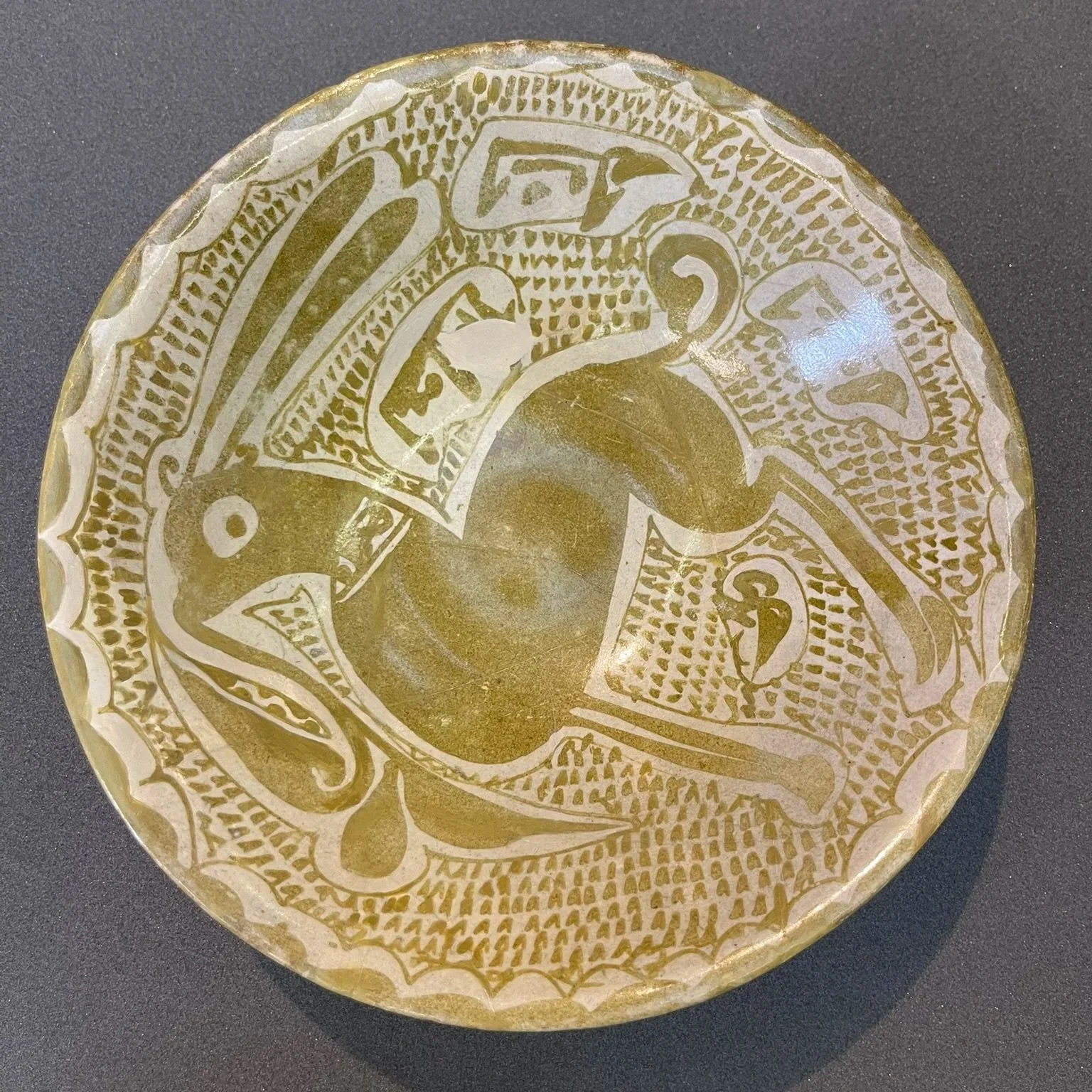
OC.145-1946 Abbasid ruby lustre bowl
-
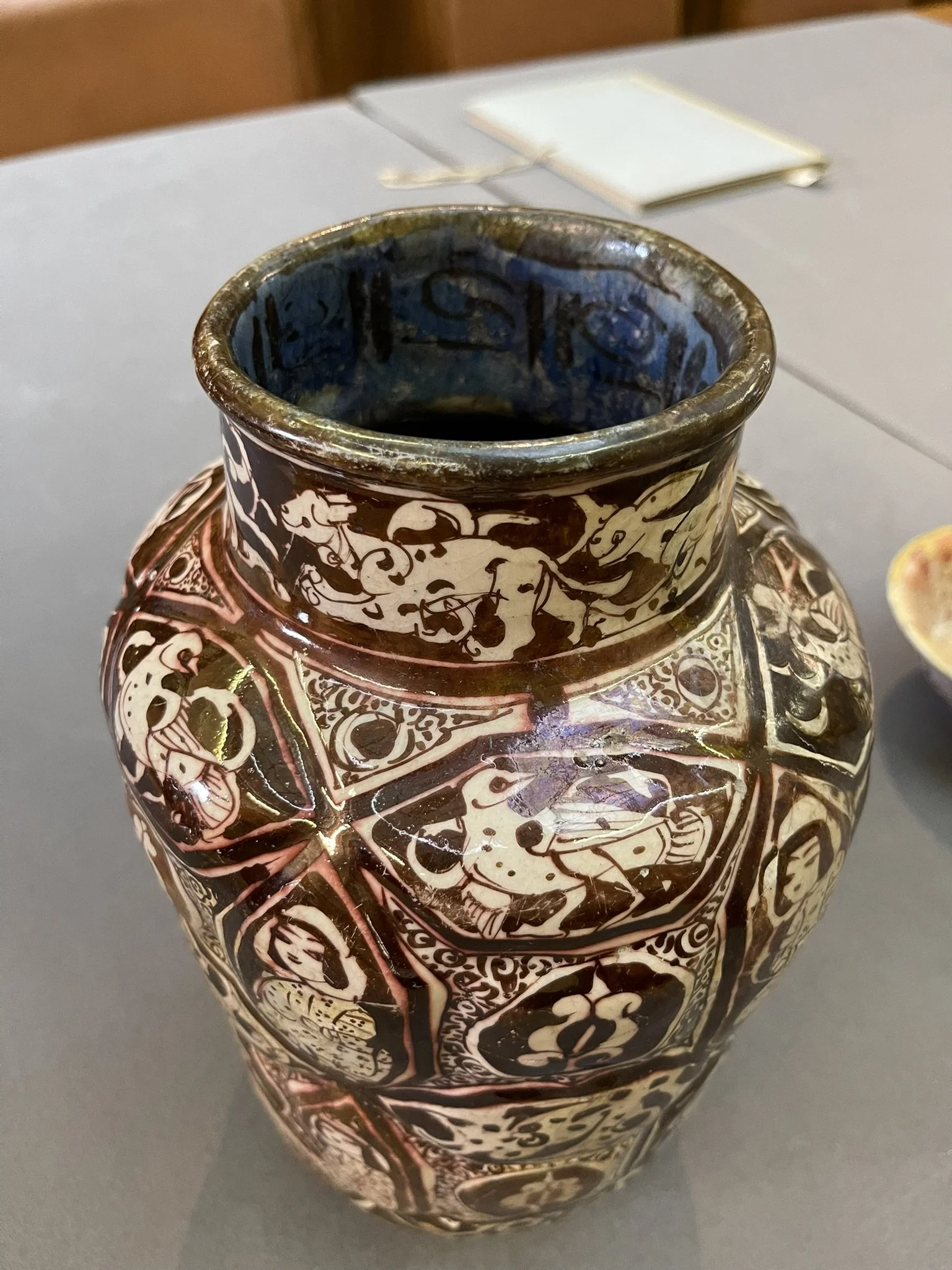
C.125-1935 Jar lustre 12th C, Seljuq Kashan (?)
-
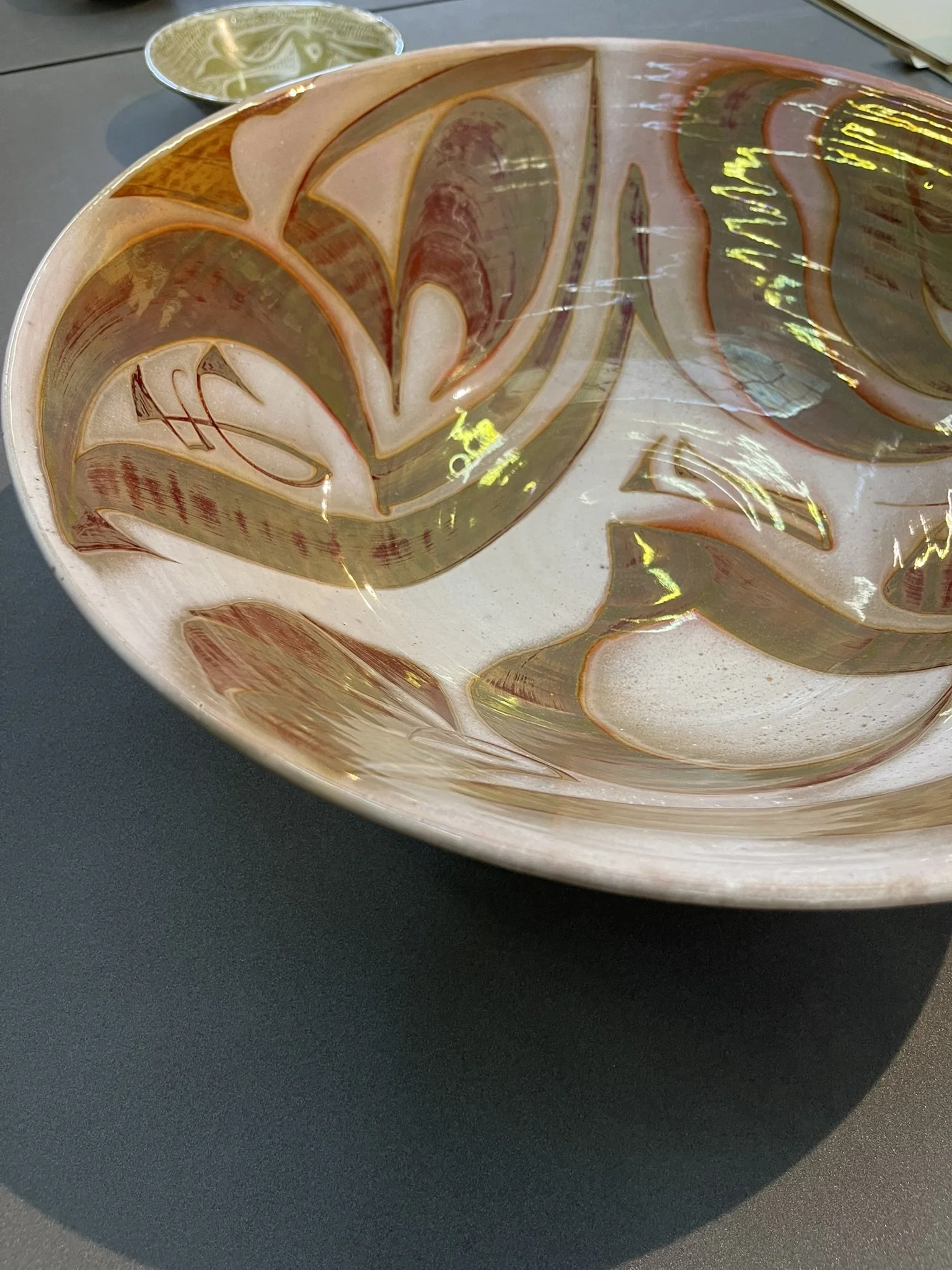
C.39-1981 Lustre bowl, Alan Craiger-Smith
-
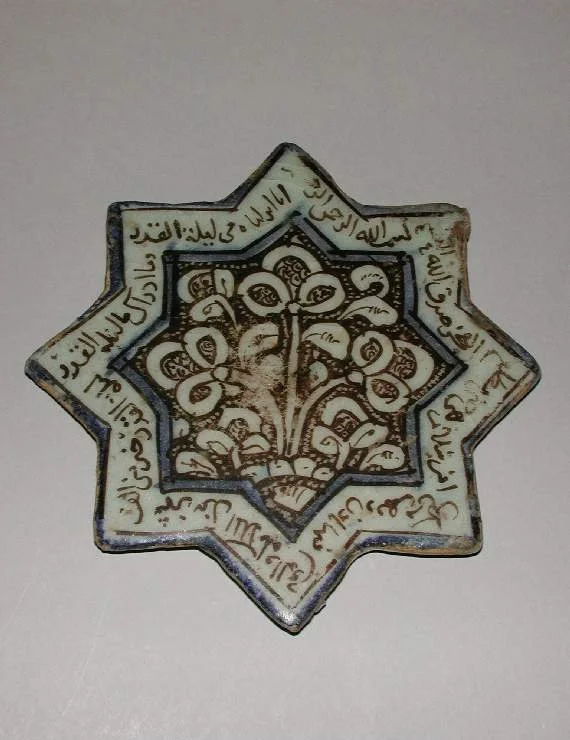
Star tile with Surah al-Qadr From a shrine in Iran, 13th C