
University Library Manuscripts
Part 2
Plants in scientific and literary manuscripts
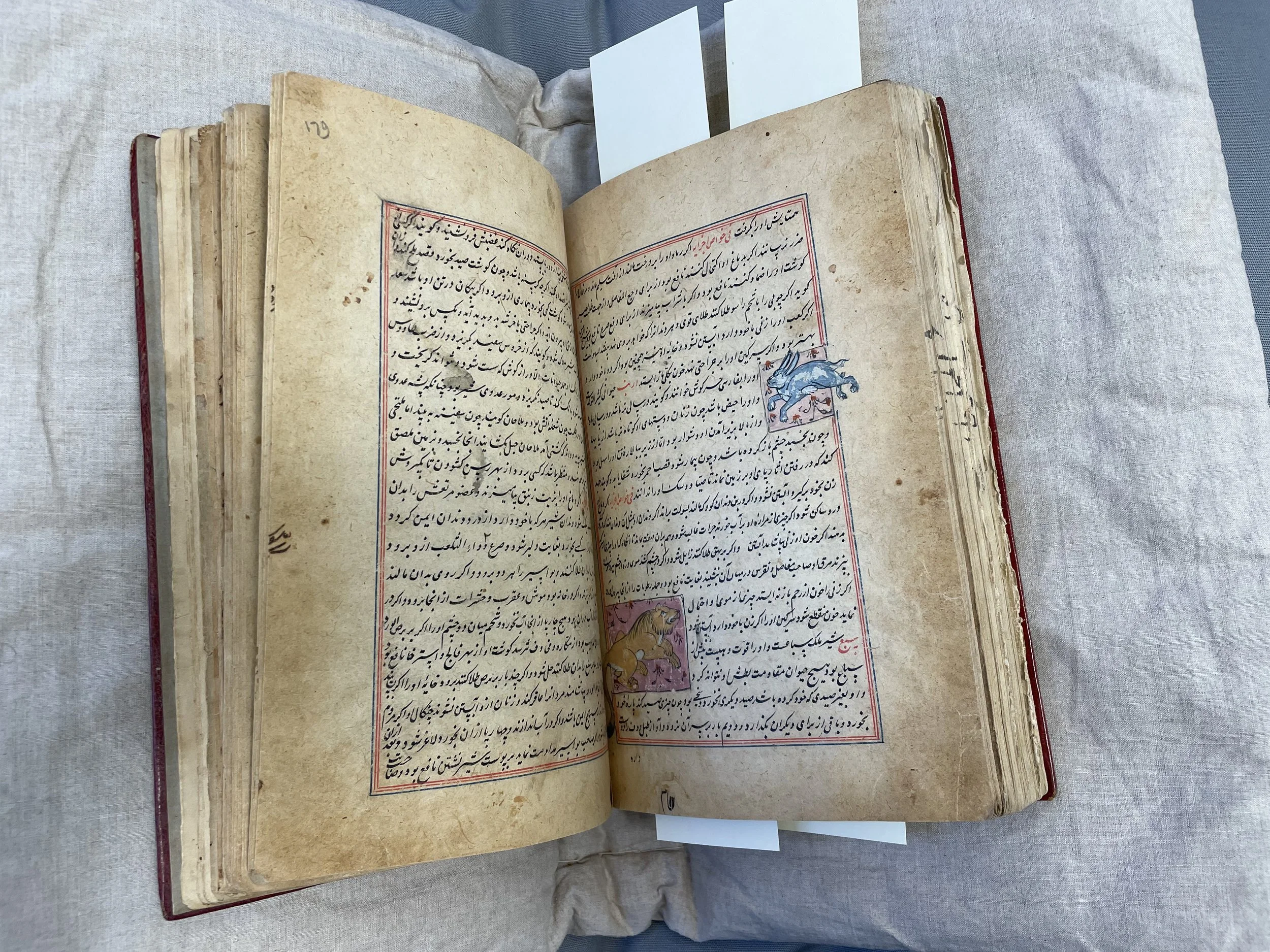
In this session, we were joined by Yasmin Faghihi (Head of Near Eastern collection) and Kristine Rose-Beers (Head of Conservation) who walked us through some of the material elements of Islamic manuscripts. We examined a few more scientific and geographic manuscripts. More importantly, we continued to build on the theme of transmission of knowledge by examining the movement of knowledge from Arabic into Latin, as seen in the Tacuinum Sanitatis (Latin translation of the Arabic, Taqwim al-Sihha). We also looked at illustrated manuscripts in Arabic and Persian, such as the Maqamat (Assemblies) of al-Hariri, the ‘Ajaib al-Makhluqat (Wonders of Creation), and the Khamsa (Quintet) of Nizami, paying particular attention to the use of plants and botanicals in narrative illustrations.
In this session, we considered how plants are presented, what they illustrate, and whether there certain plants mentioned consistently in the material.
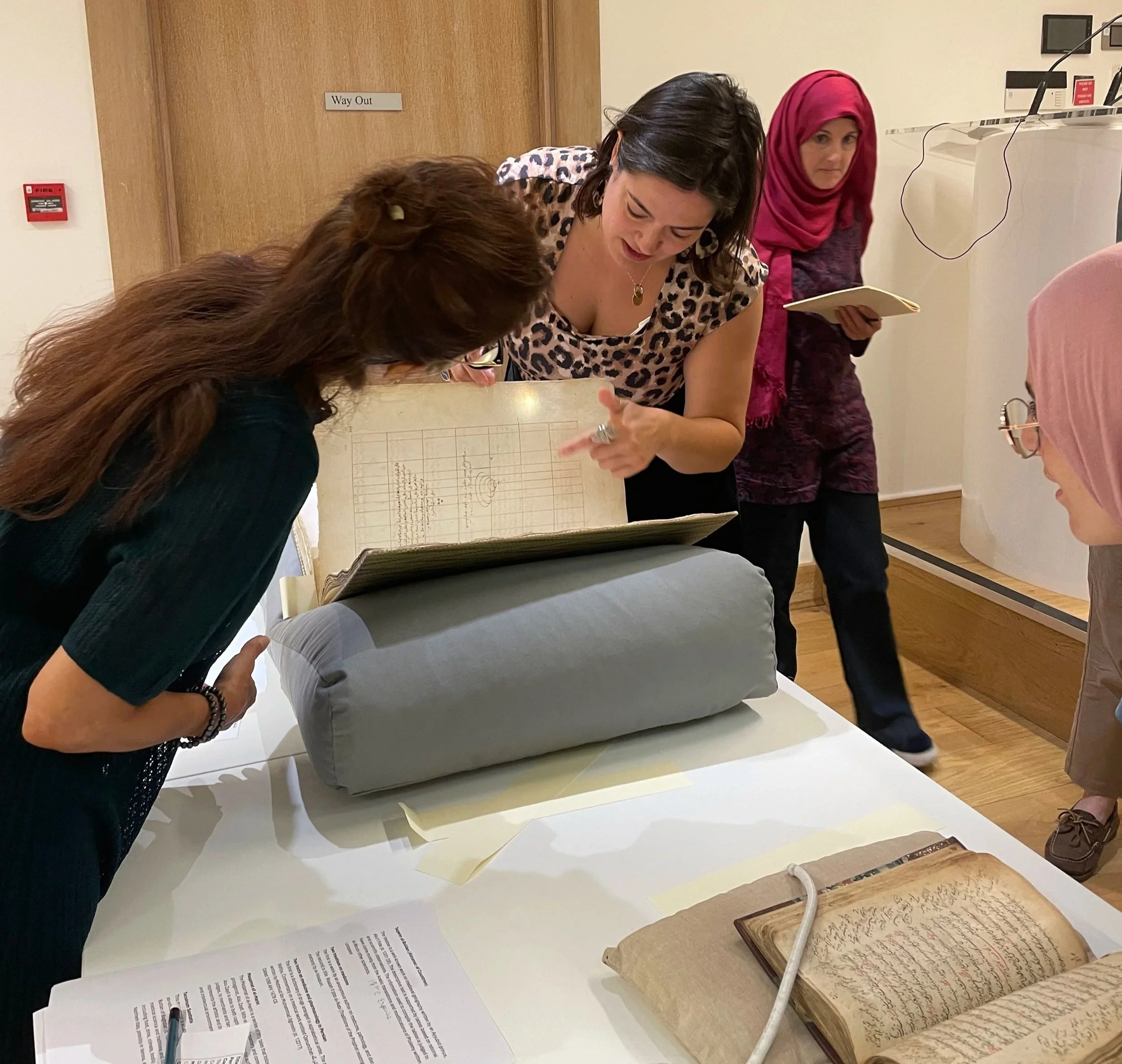
Examining the manuscript with Kristine Rose-Beers and Yasmin Faghihi.
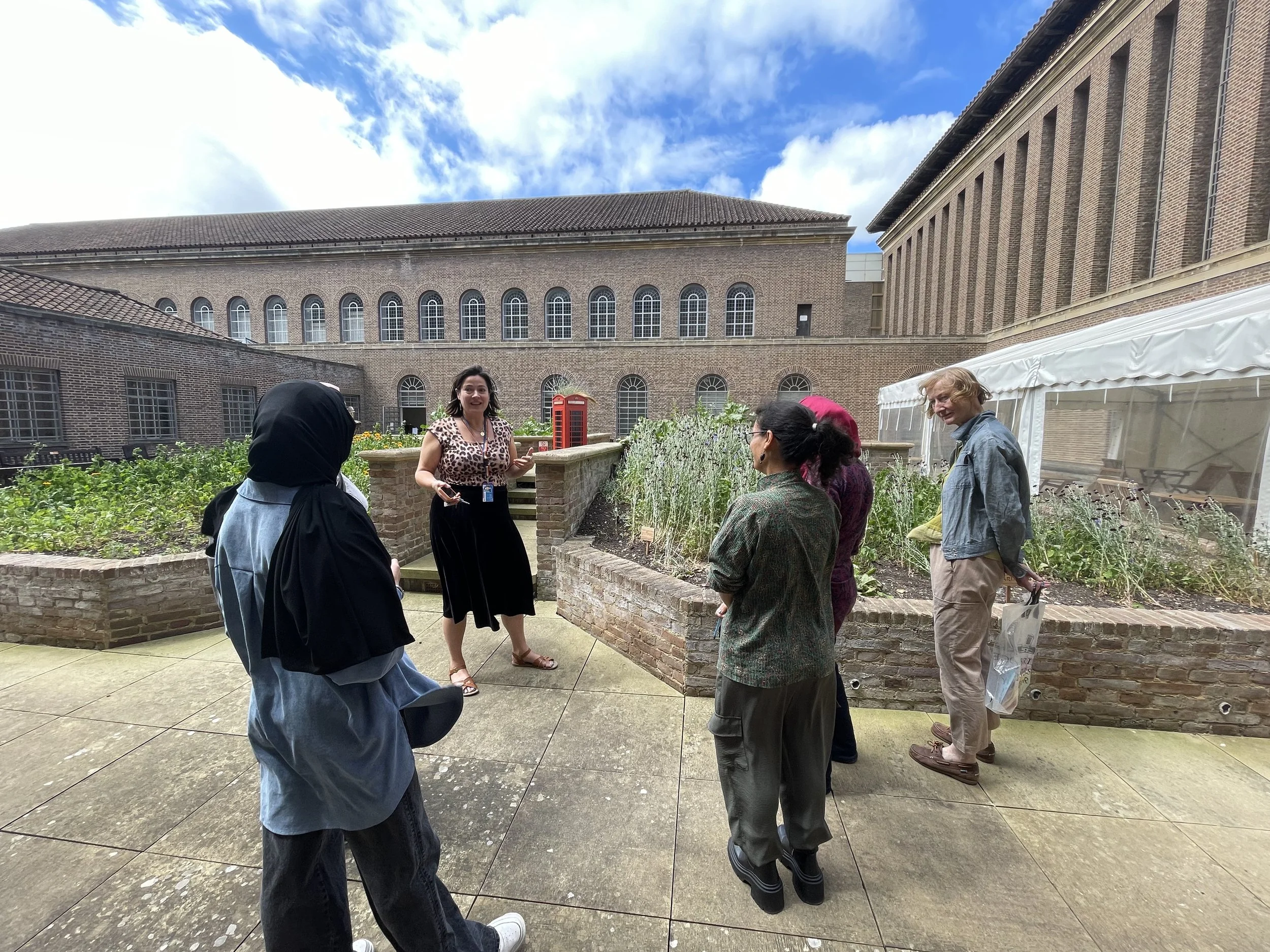
Touring the Dye Garden with Kristine Rose-Beers, North Courtyard, Cambridge University Library.
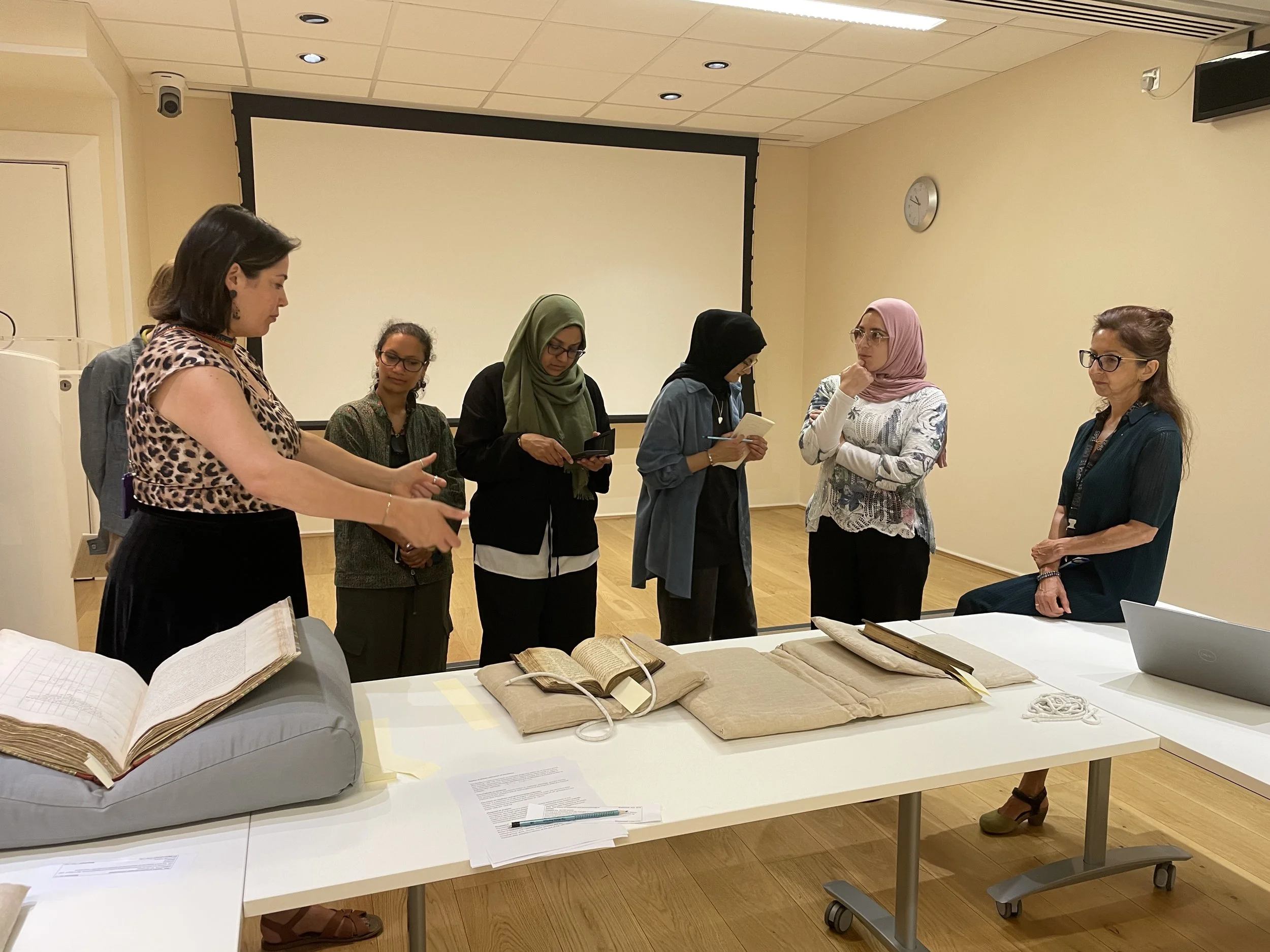
Manuscript discussions with Yasmin Faghihi and Kristine Rose-Beers, Cambridge University Library
List of manuscripts
-
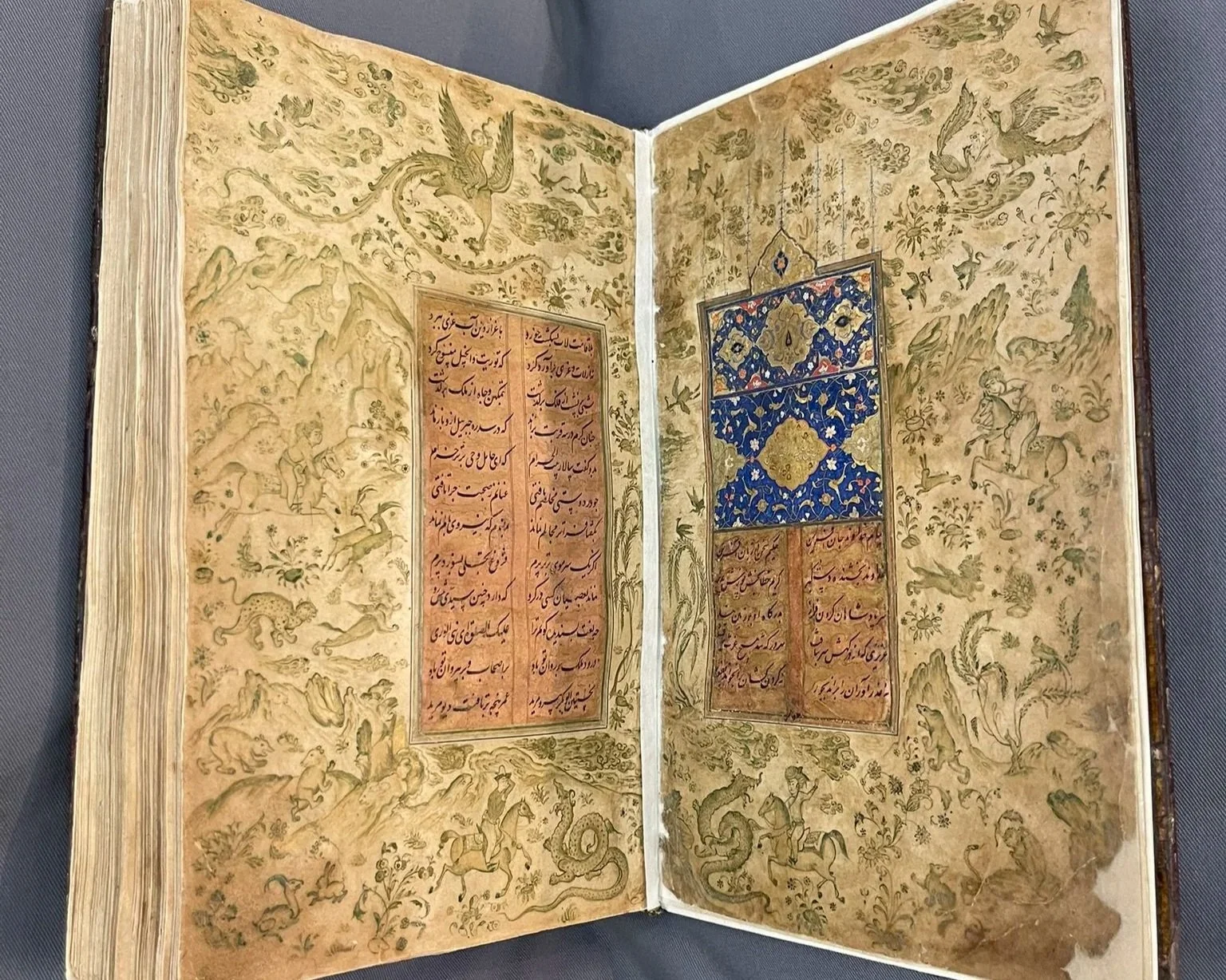
MS 261-1949 Bustan (Orchard) of Sa’di, Persian, 1505 CE
-
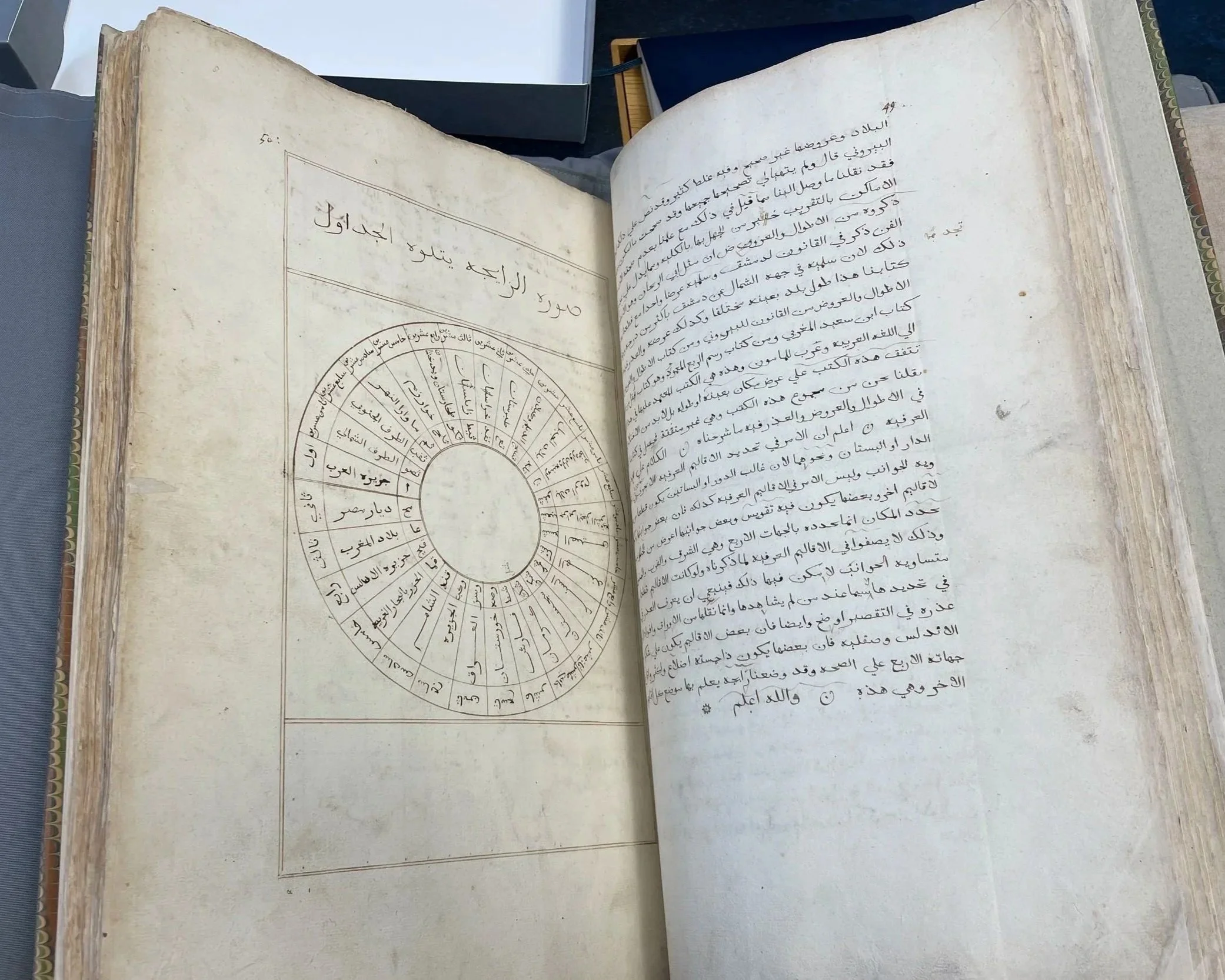
Taqwim al-Buldan (Almanac of Countries), likley copied by Erpenius
-
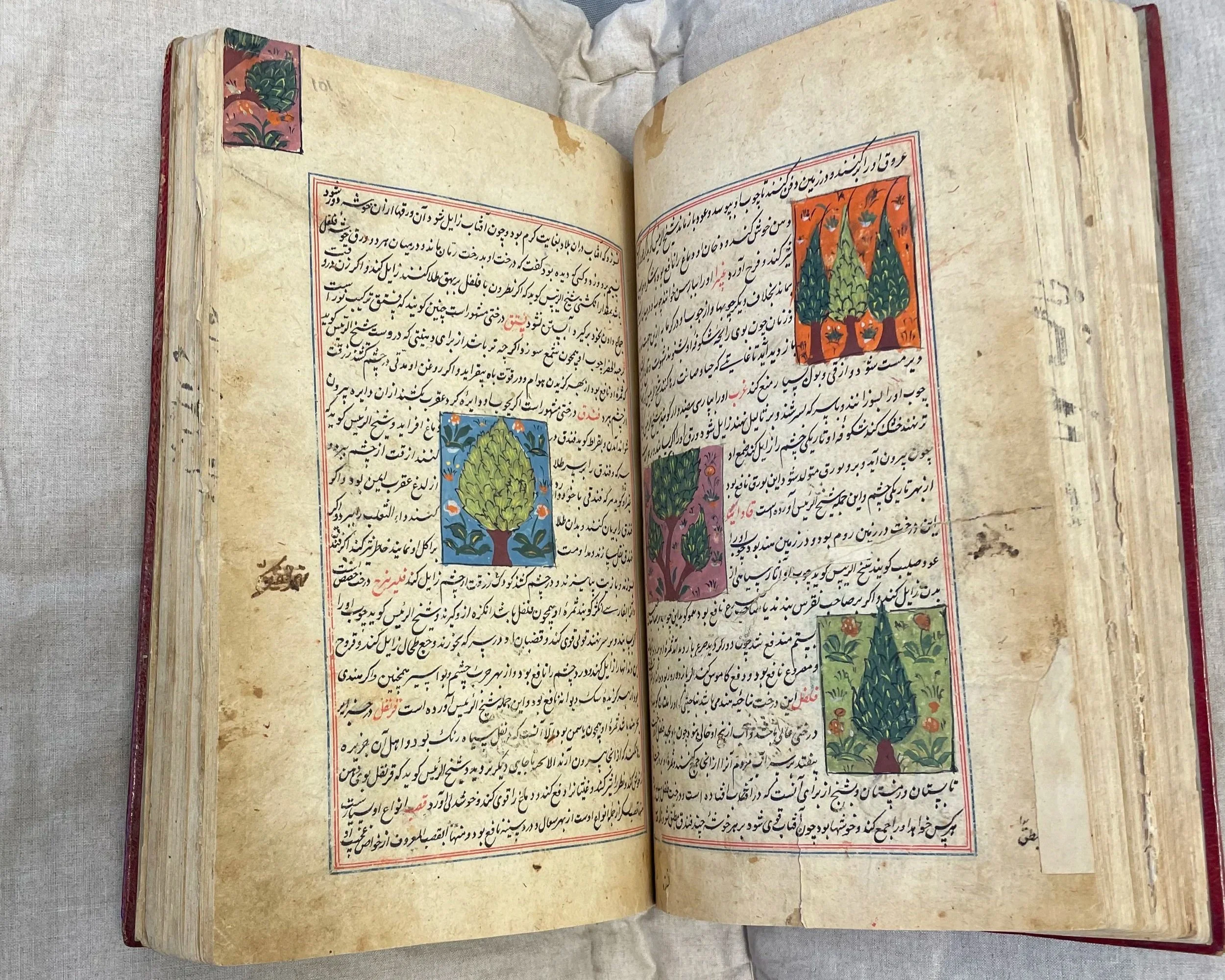
‘Aja’ib al-makhluqat (Wonders of Creation), 1613-14 CE
-
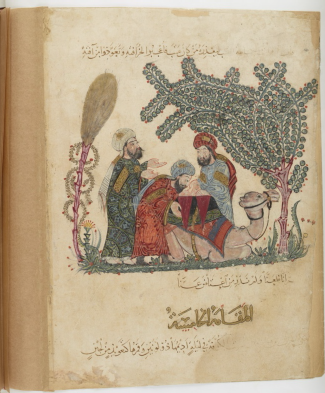
Maqamat of al-Hariri, 13th C
-
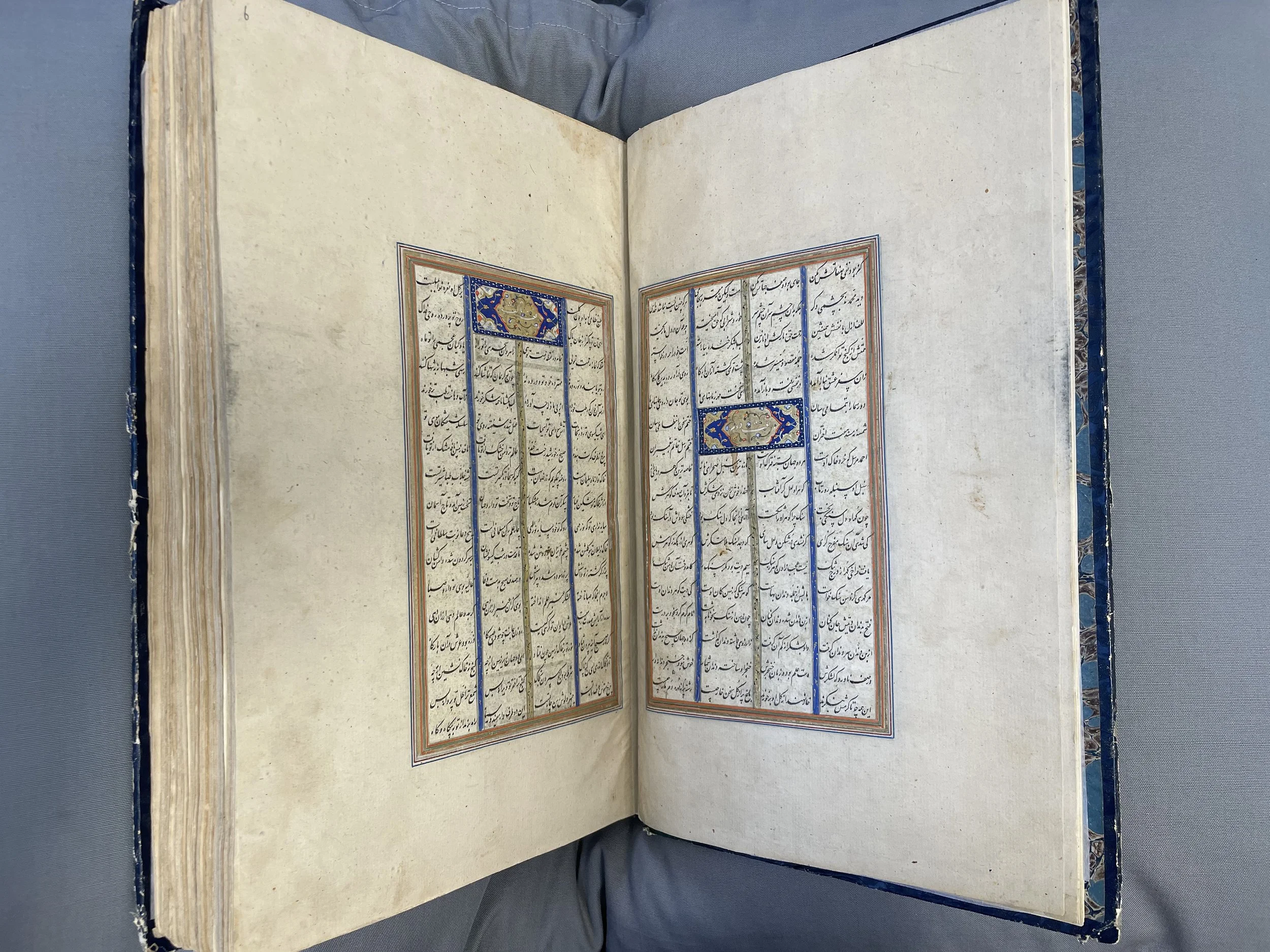
Khamsa (Quintet) of Nizami, 17th C
-
Taqwīm al-adwiyah al-Mufrada (The Almanac of Simple Drugs)