
Manuscripts and scrolls
Highlights from illustrations, imagery and text found in Islamic manuscripts and scrolls
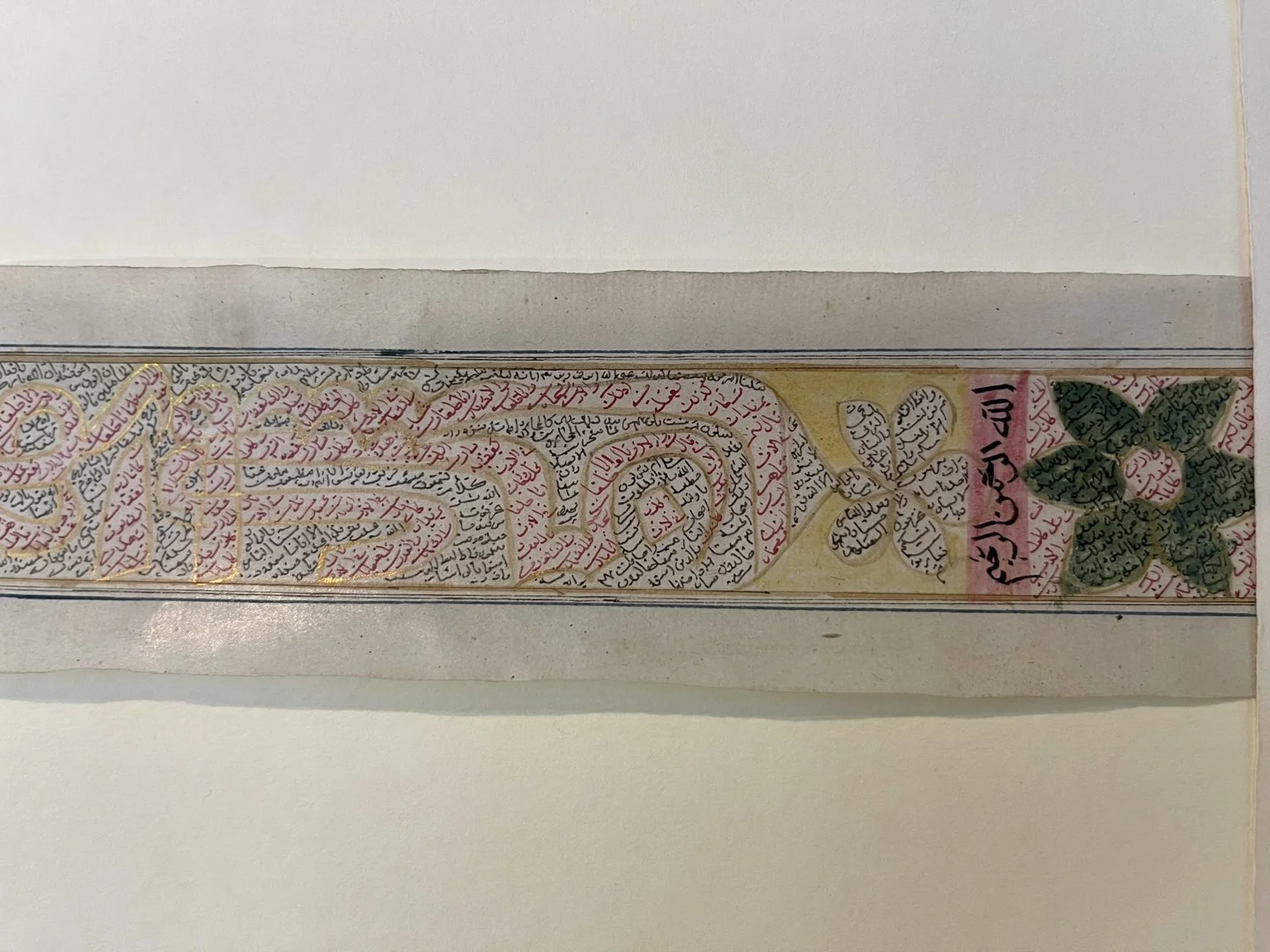
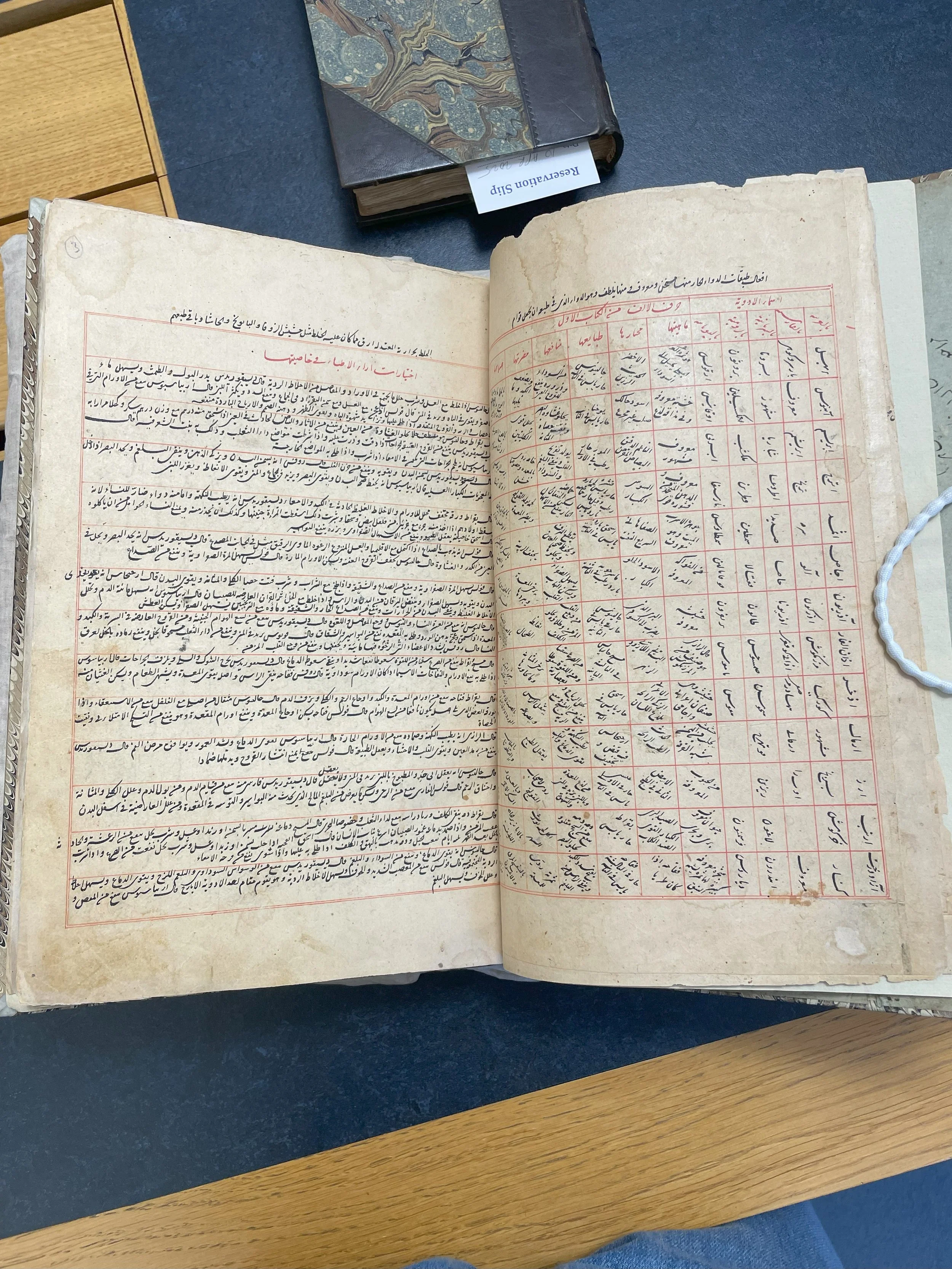
Taqwim al-adawaiyah manuscript from the University Library
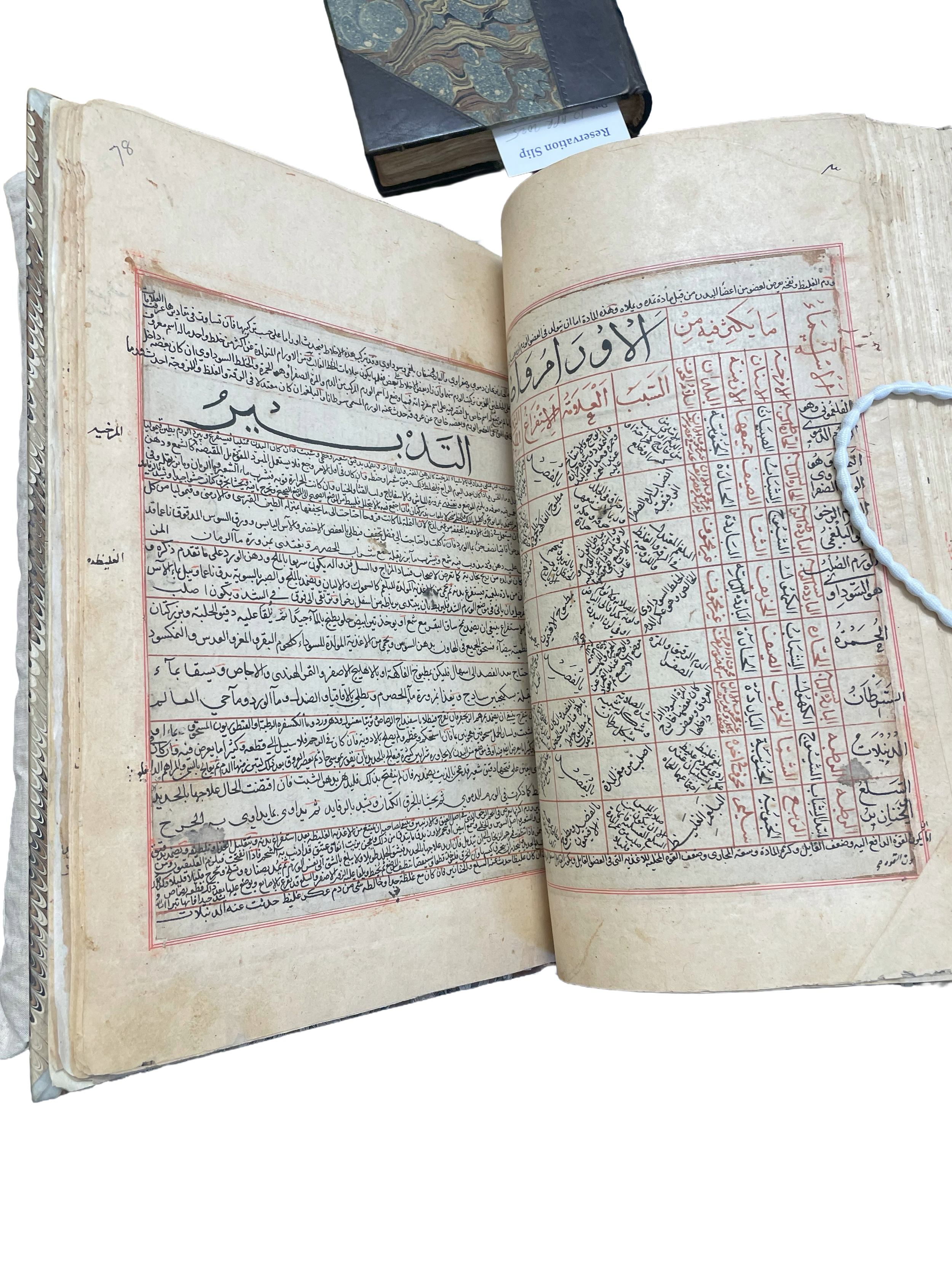
“This stood out for the amazing design and organization of information on the page. Plus the incredible clarity and beauty of the calligraphy, including the stretched characters to make a heading stand out to help navigate the infomation.”
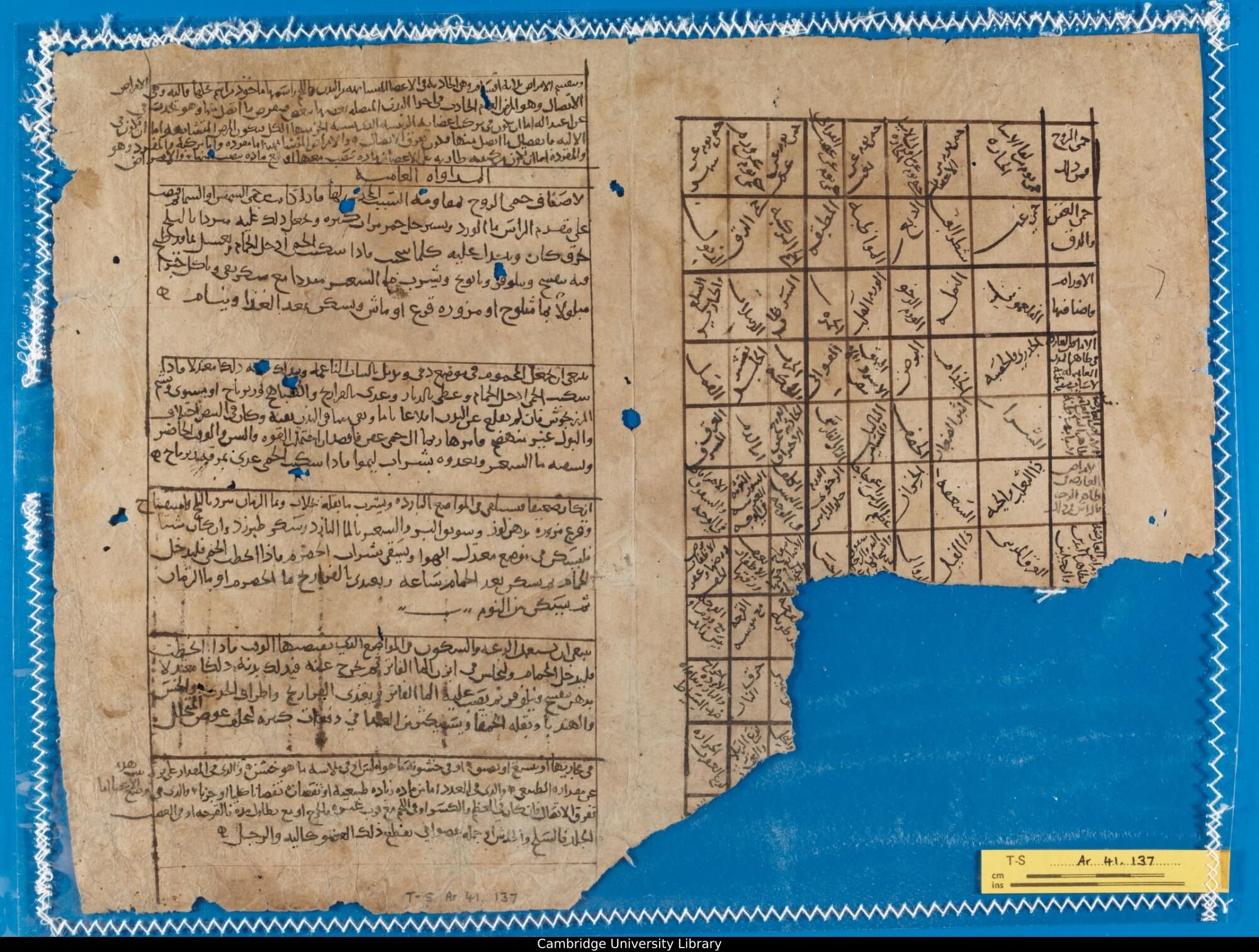
Genzia fragment
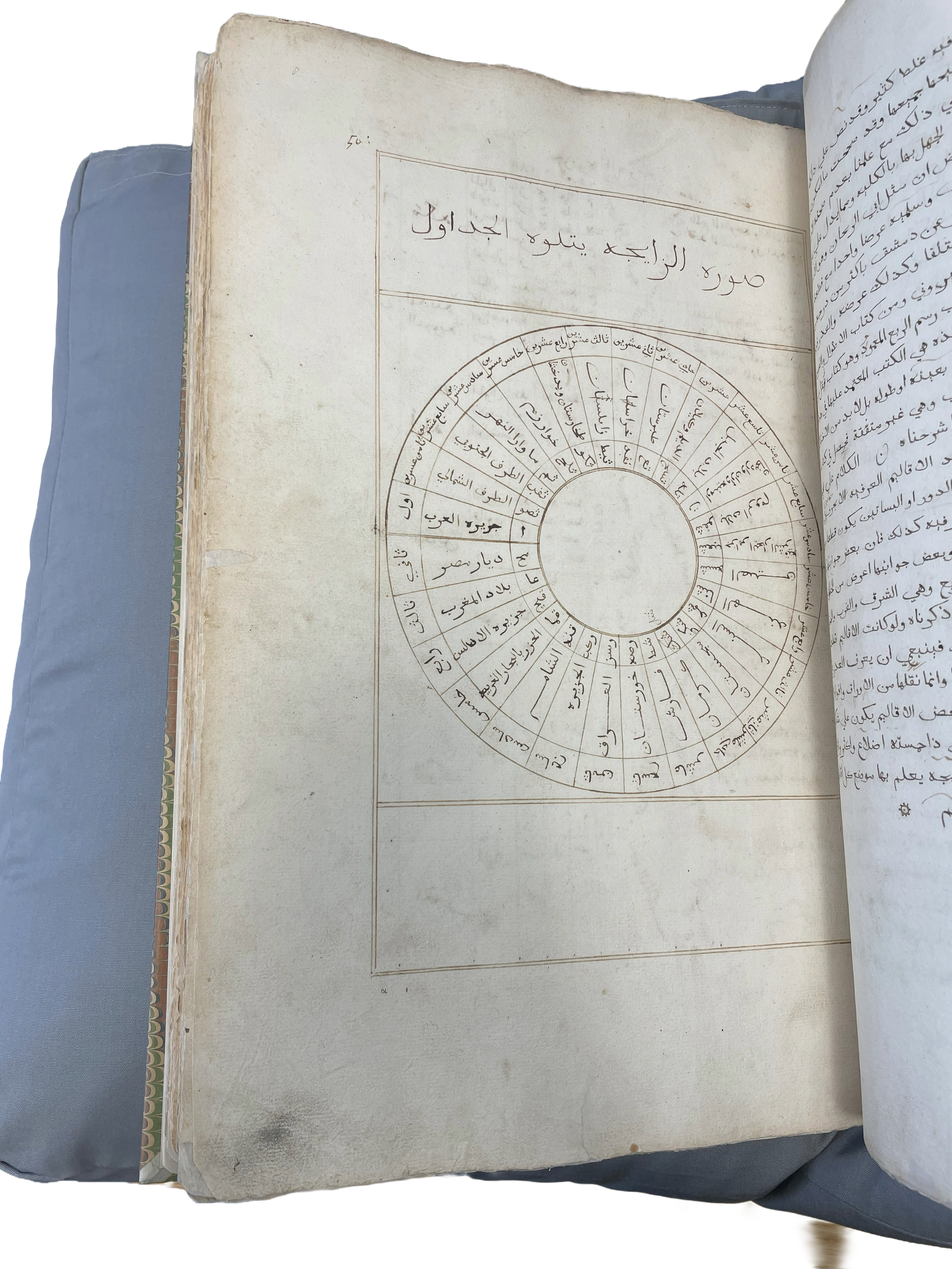
The jadwal (table) in the Taqwim al-Buldan manuscript from the University Library
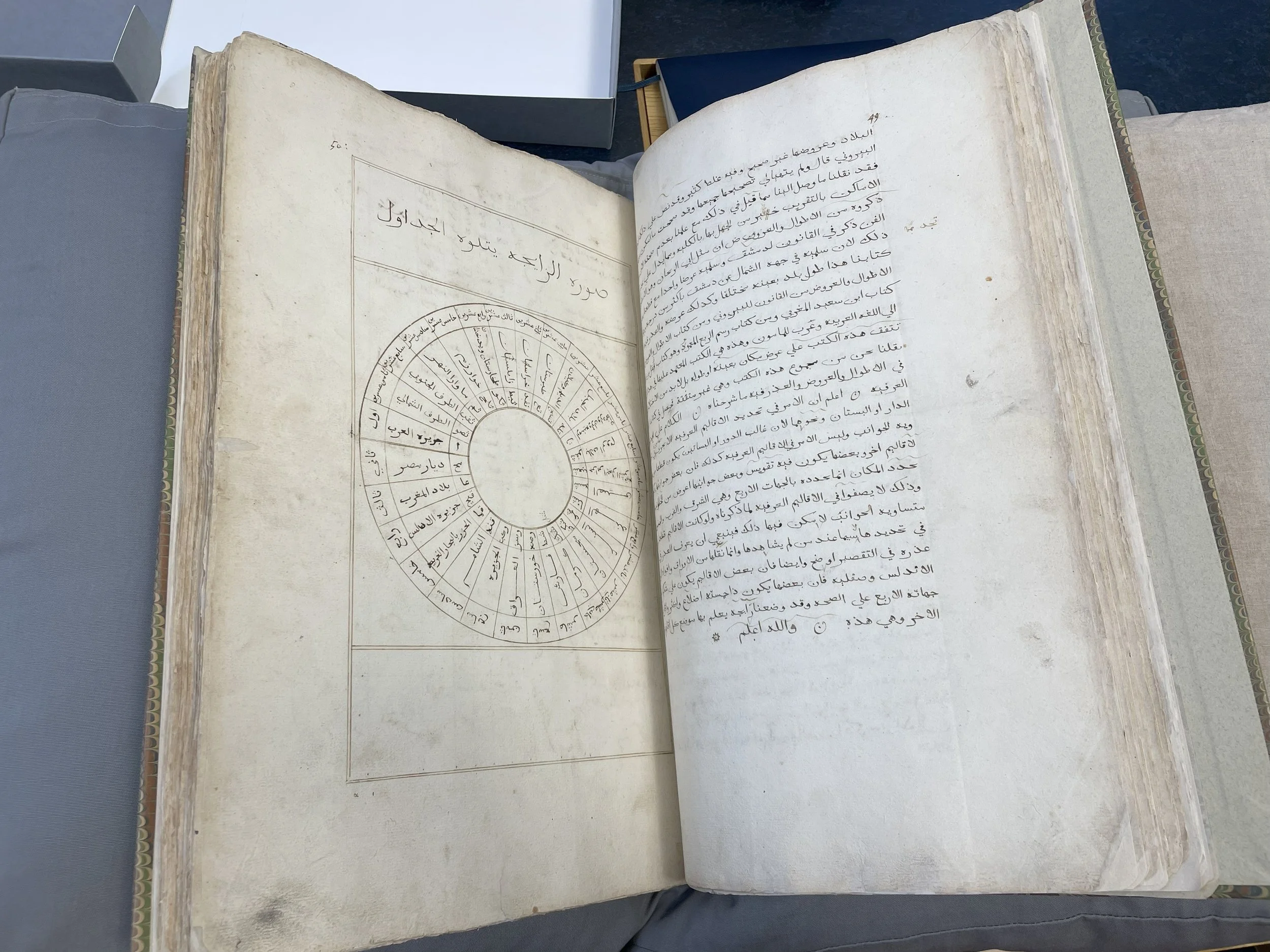
“My favourite object is the jadwal - the way that the content of the table was made was not only about communicating information – it was also about communicating the philosophy of one-ness. I find it fascinating that the philosophy of beliefs (way of) seeing the world comes out in all that Muslims produced.”
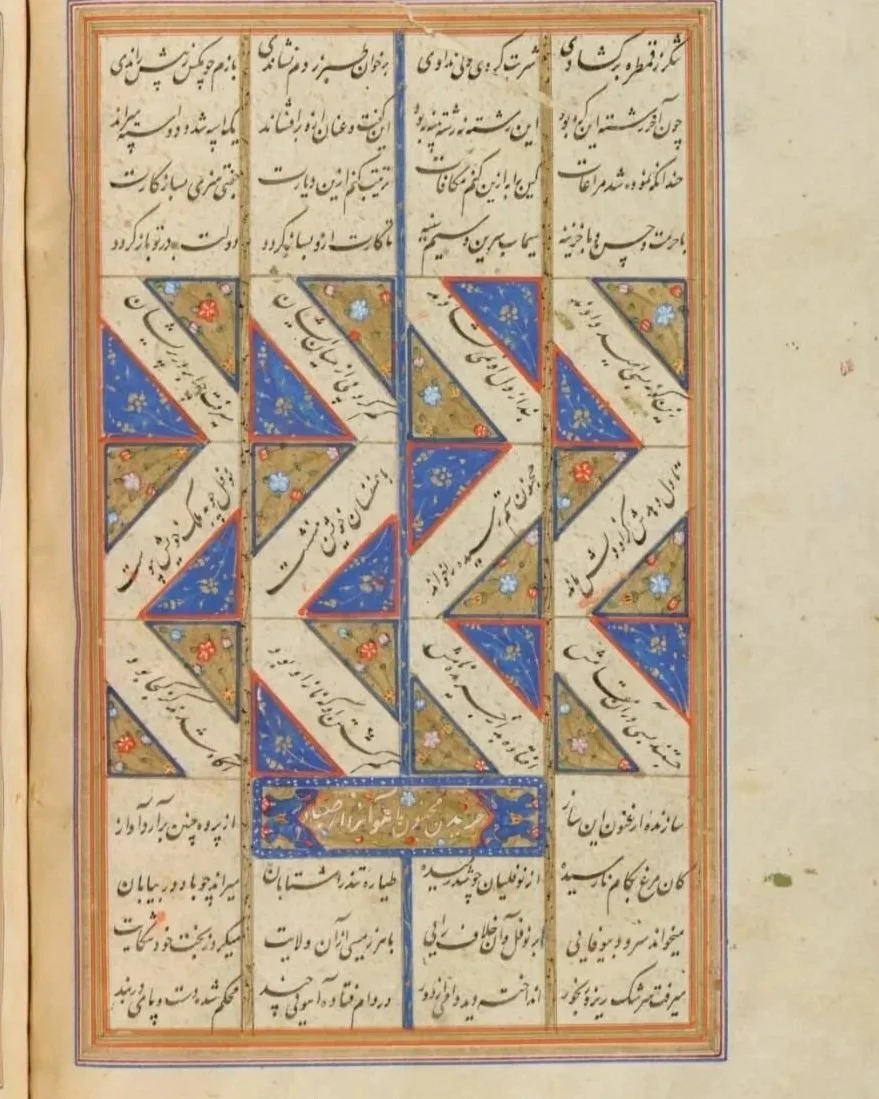
Paging through Bustan (Orchard) of Sa’di, Persian, 1505 CE.
“How knowledge that was written was sacred and protected; beautiful layout of treatments and ingredients.”
Calligraphers at work
“I love the combination of people and nature in harmony. Nature-Knowledge nexus. Transmission of knowledge between generations, which is so important for today.”
List of manuscripts
-
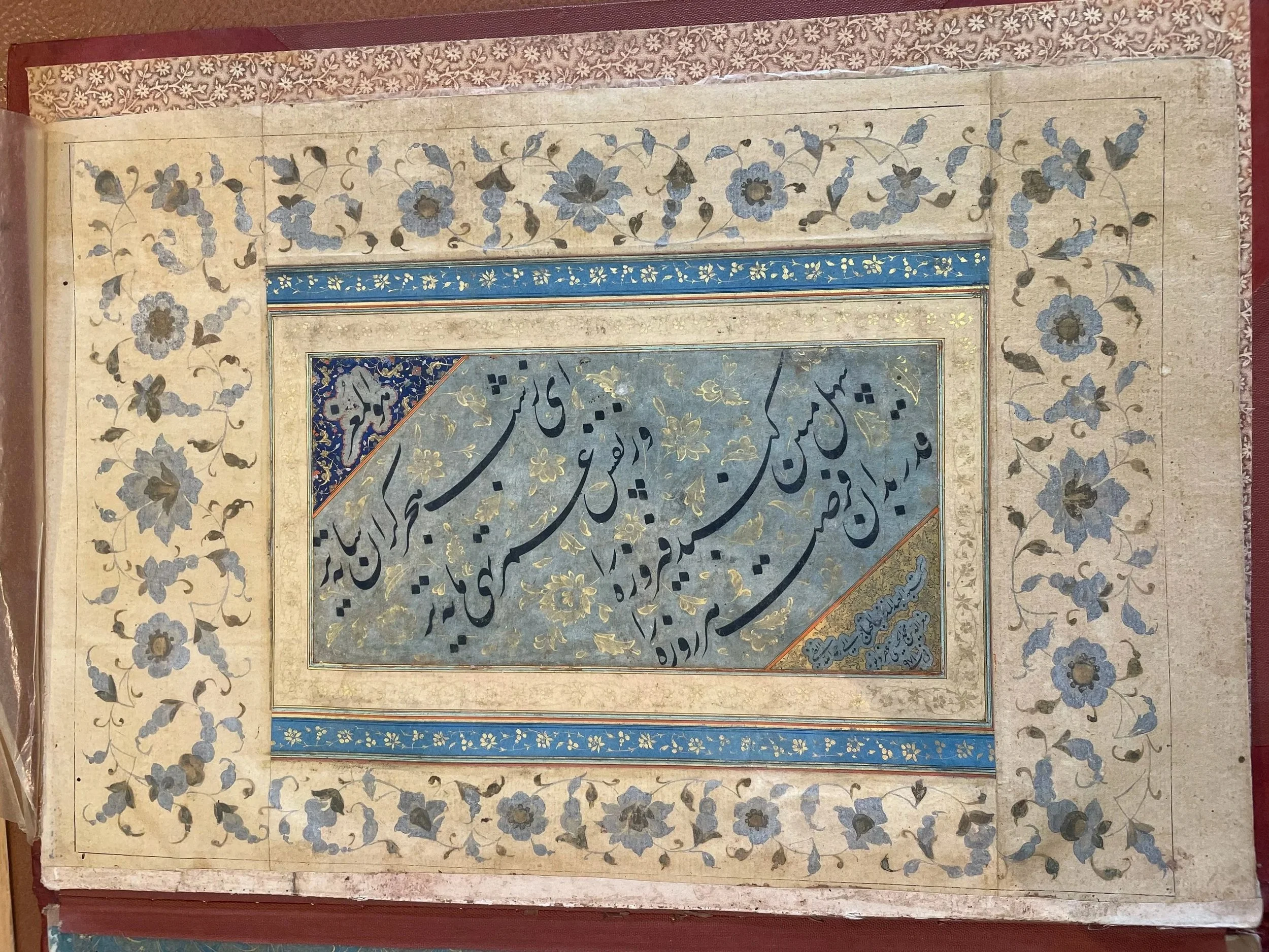
Album of calligraphy, Persian
-
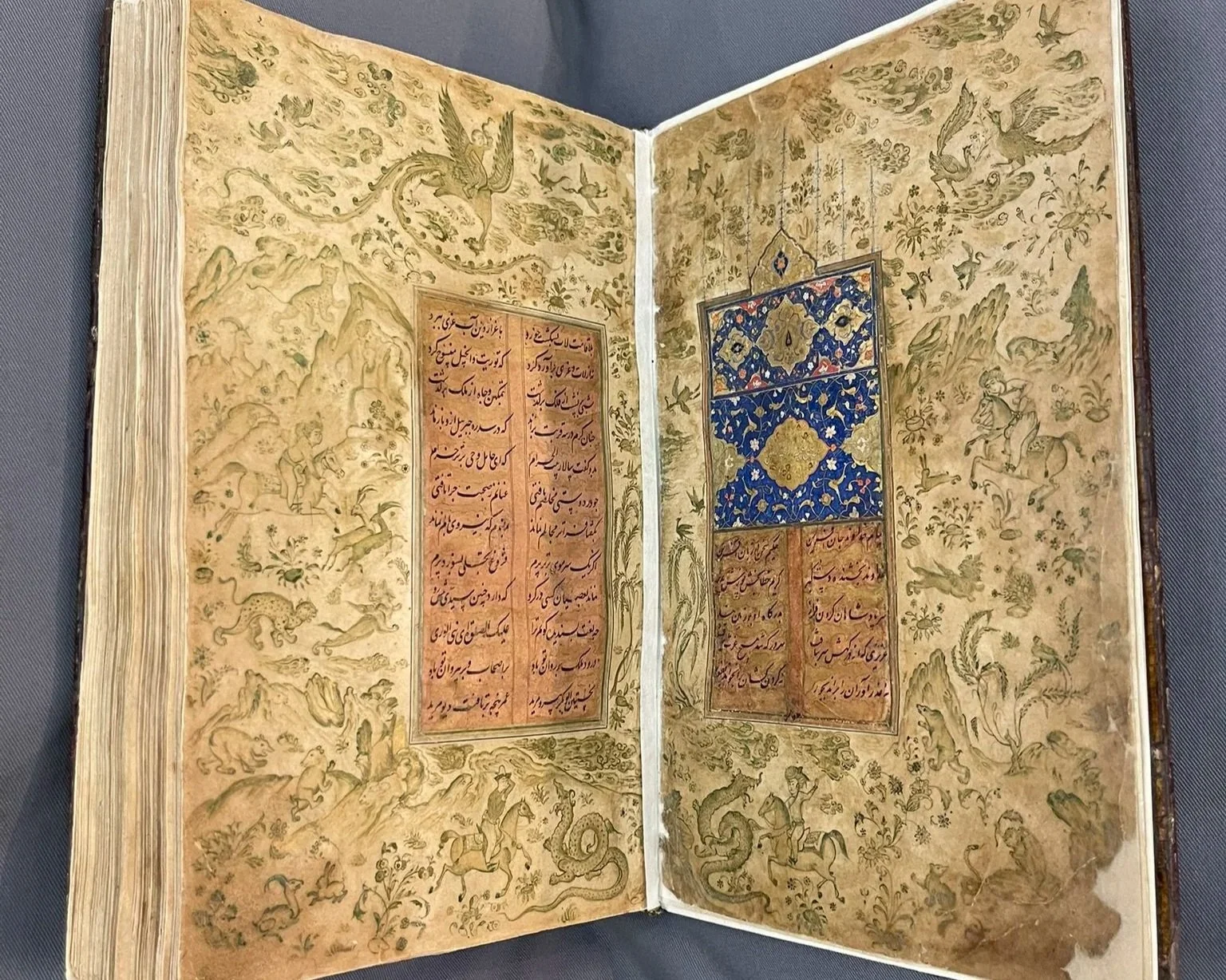
Bustan (Orchard) of Sa’di, Persian, 1505 CE
-
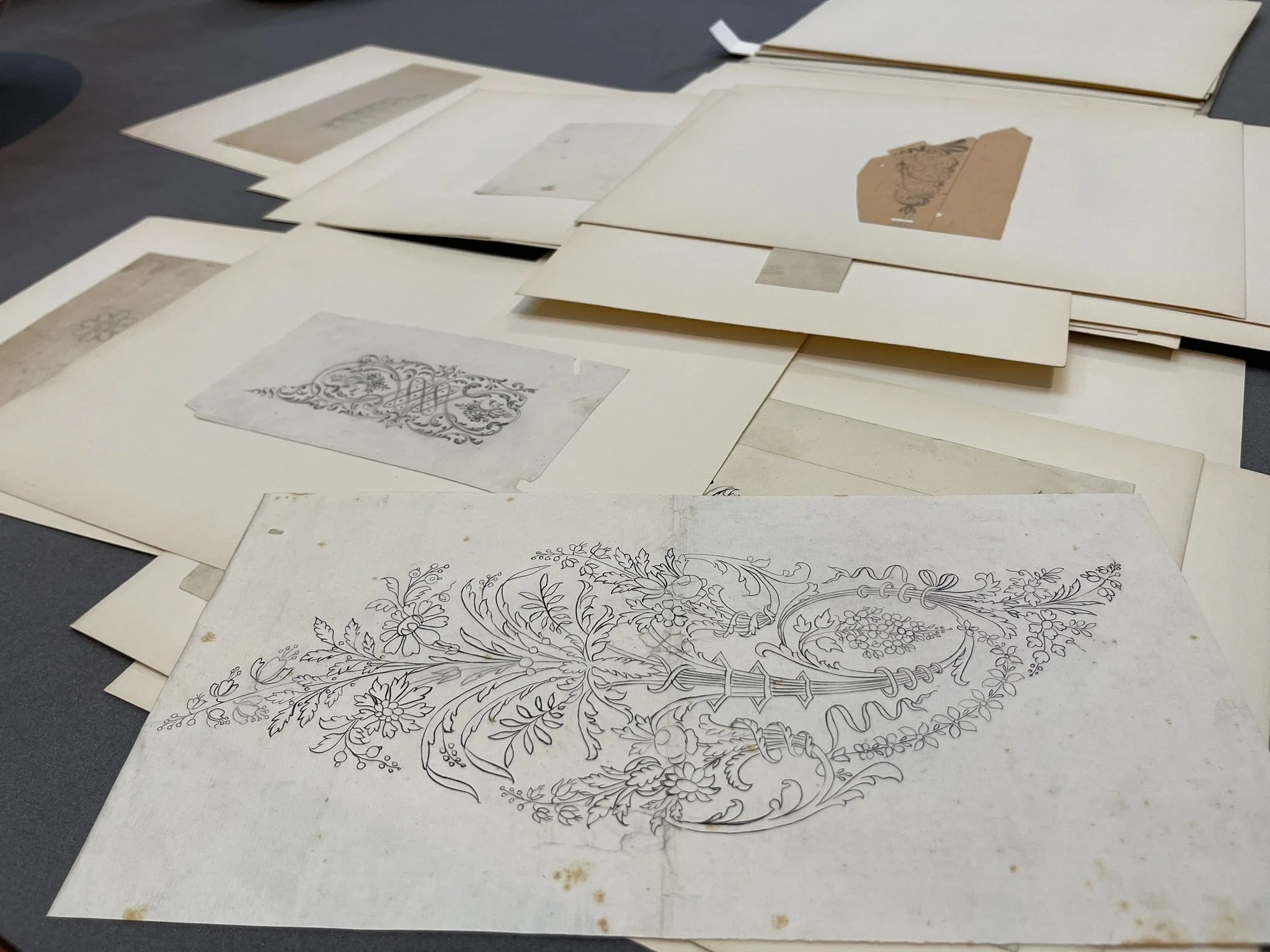
Assemblage of sketches, Turkey
-
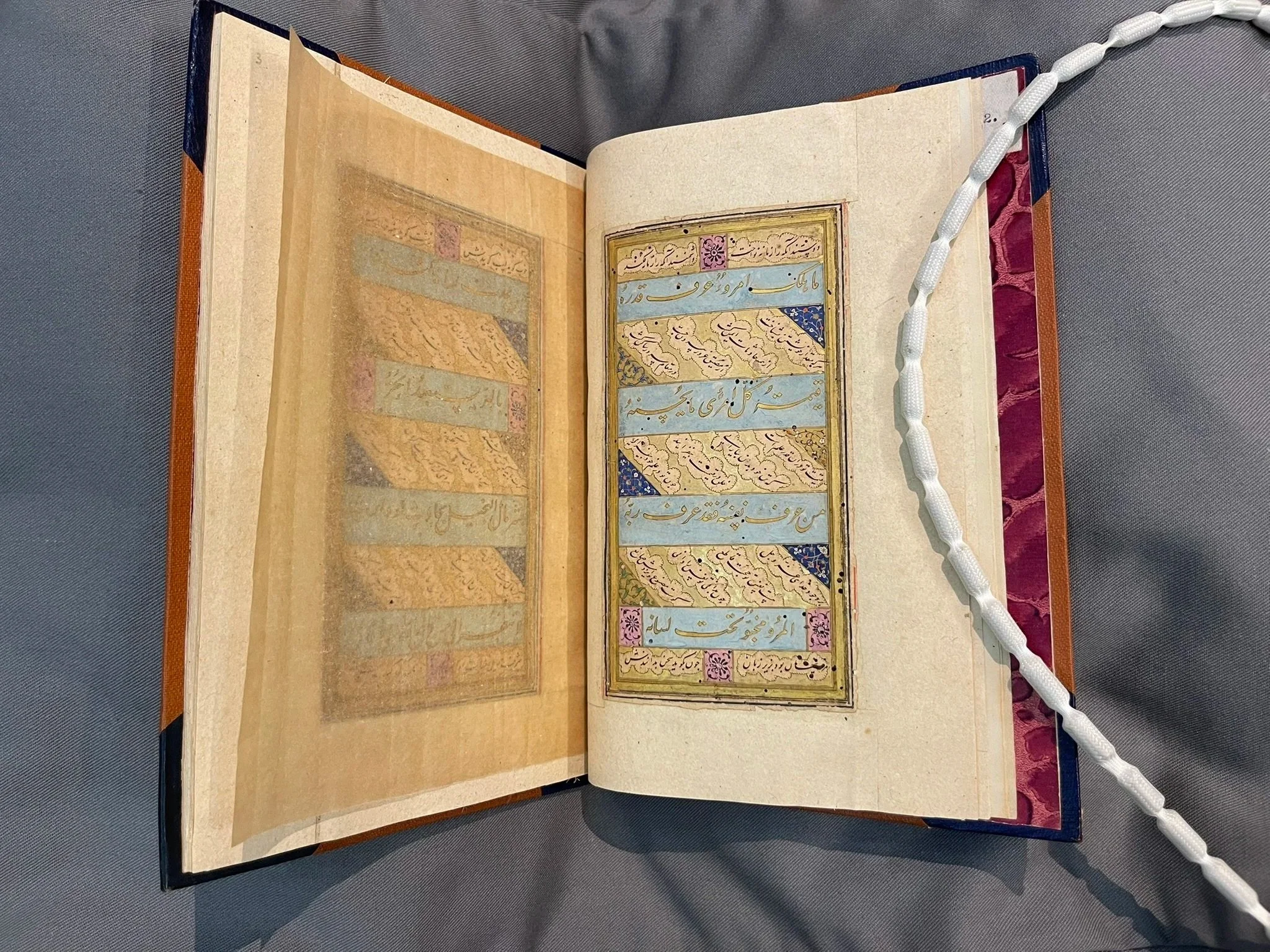
Mi’at Kalimah or One Hundred Sayings of Imam Ali, 1524-5 CE
-
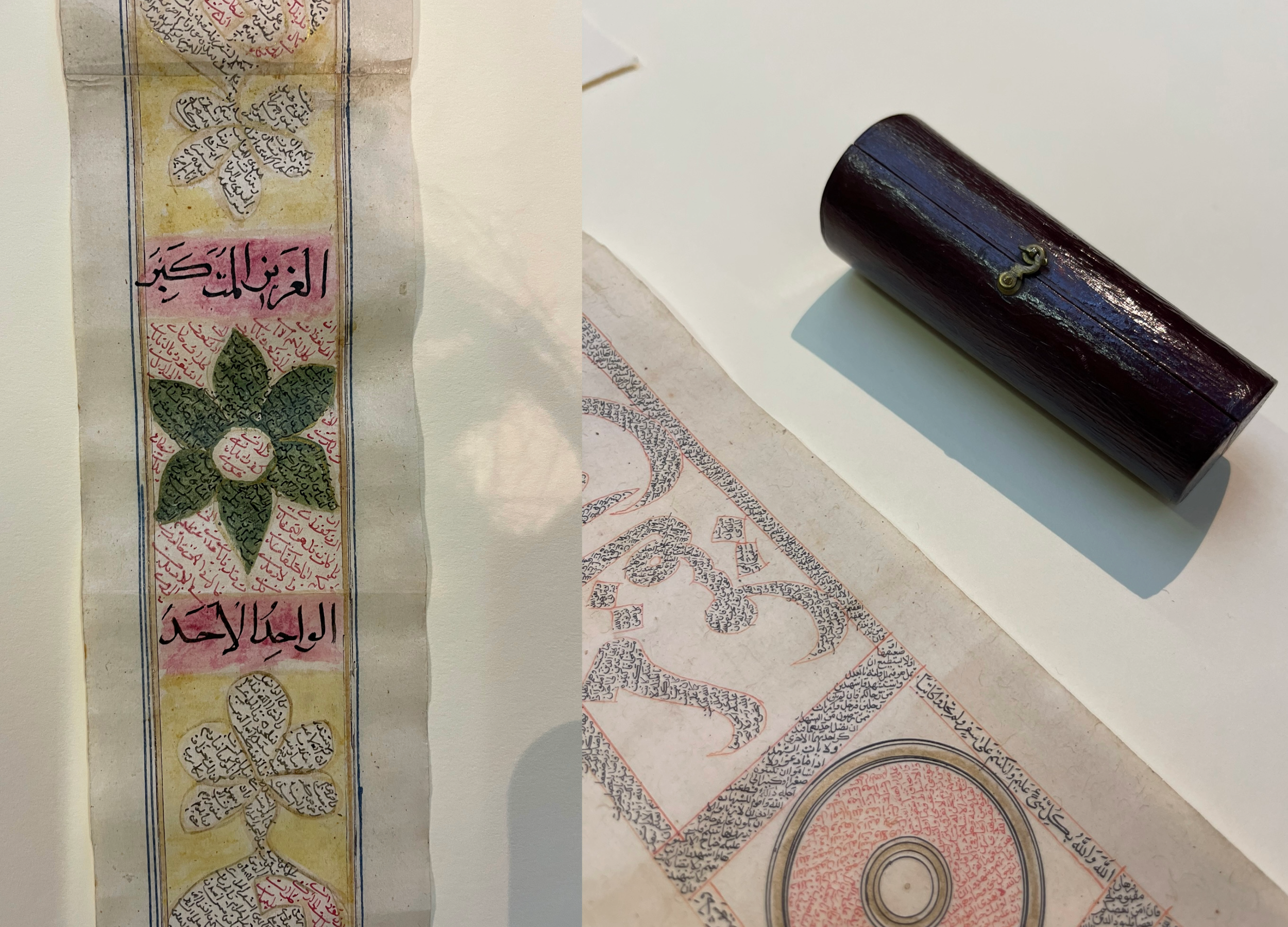
Qur’an scroll, 18th or 19th C
-
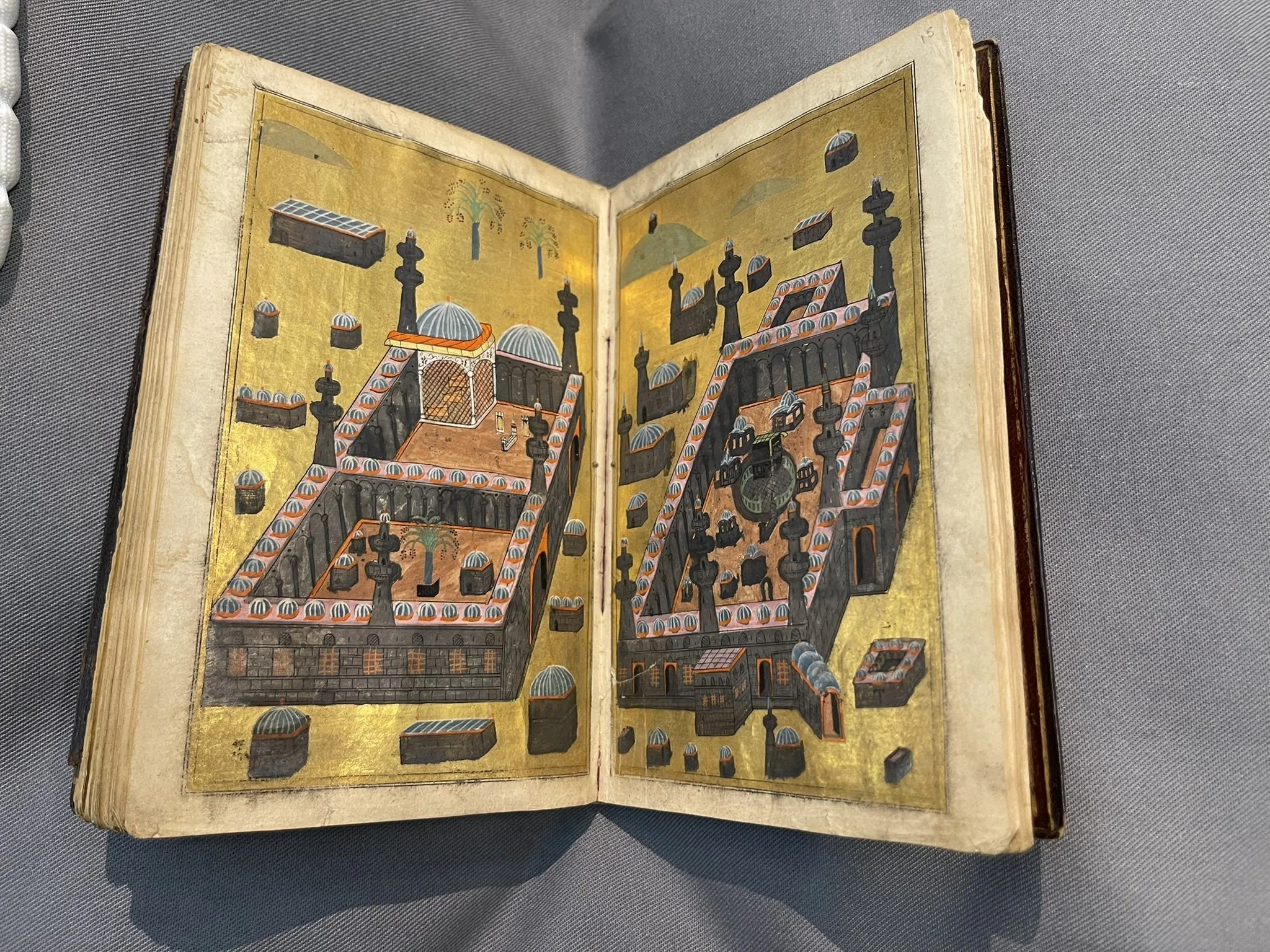
Dala’il al Khayrat (Proof of Good Deeds) by al-Jazuli, dated 1747-9 CE
-
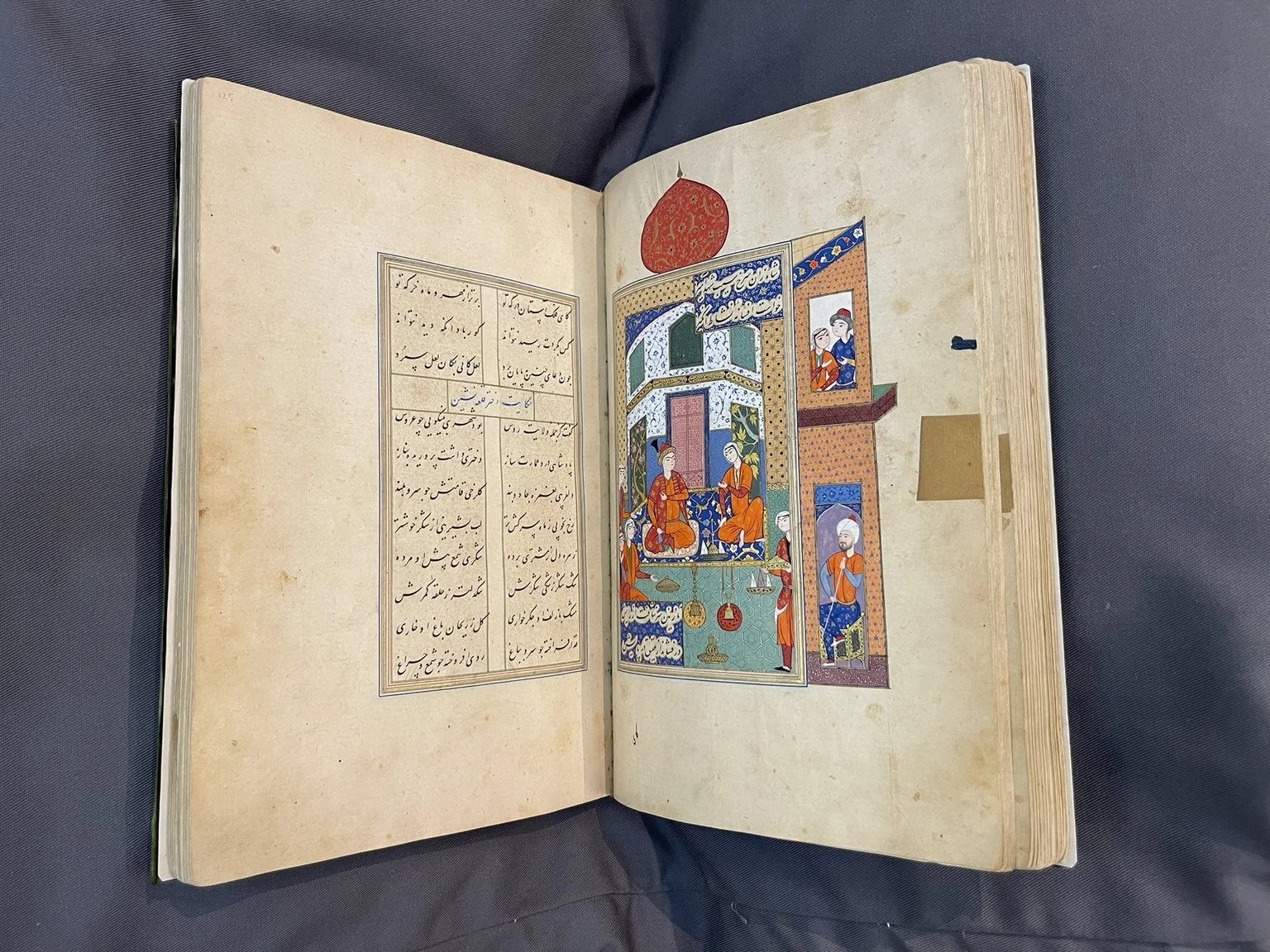
Haft Paykar (Seven Domes/Beauties) by Nizami, 1571 CE
-
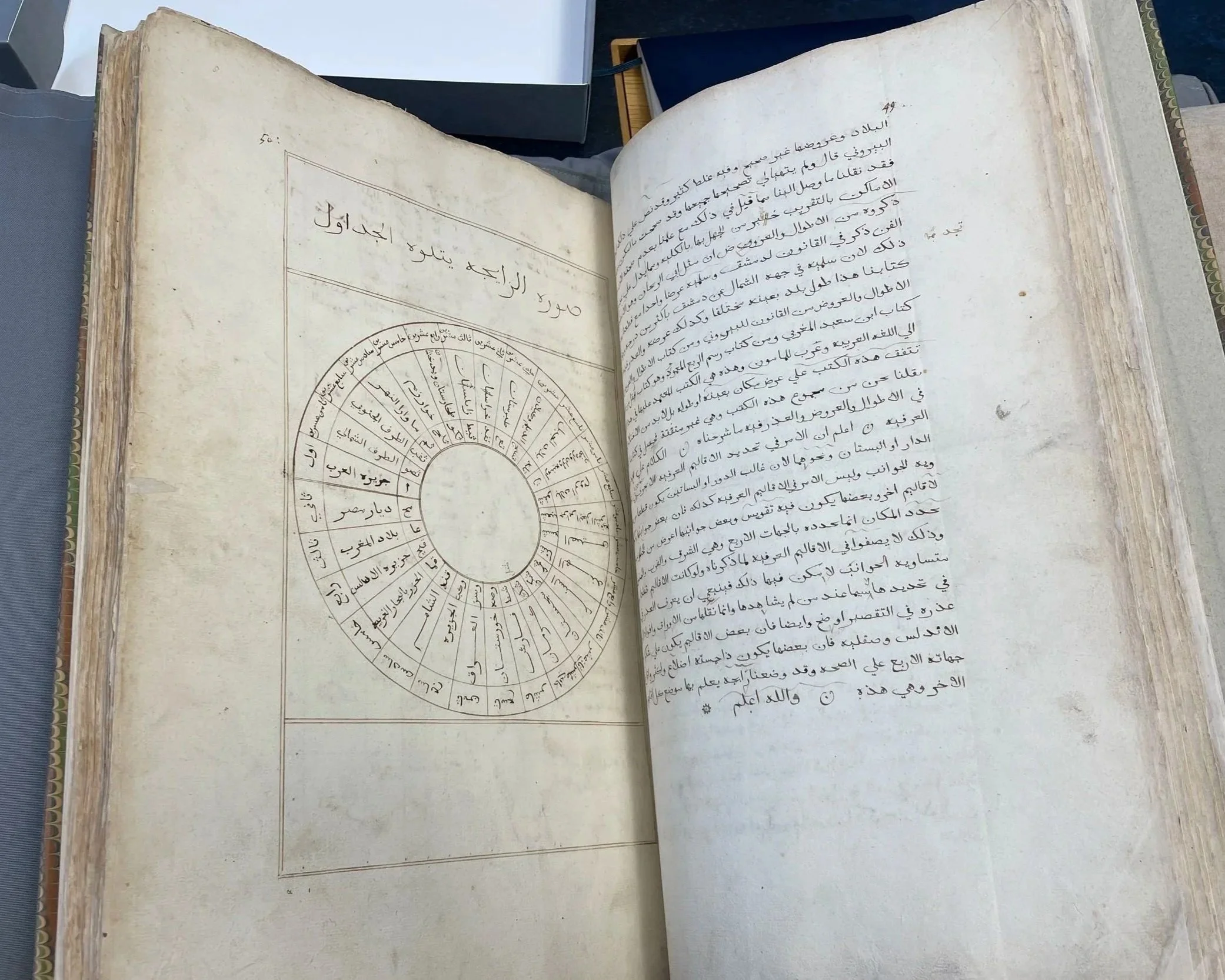
Taqwim al-Buldan (Almanac of Countries), likley copied by Erpenius
-
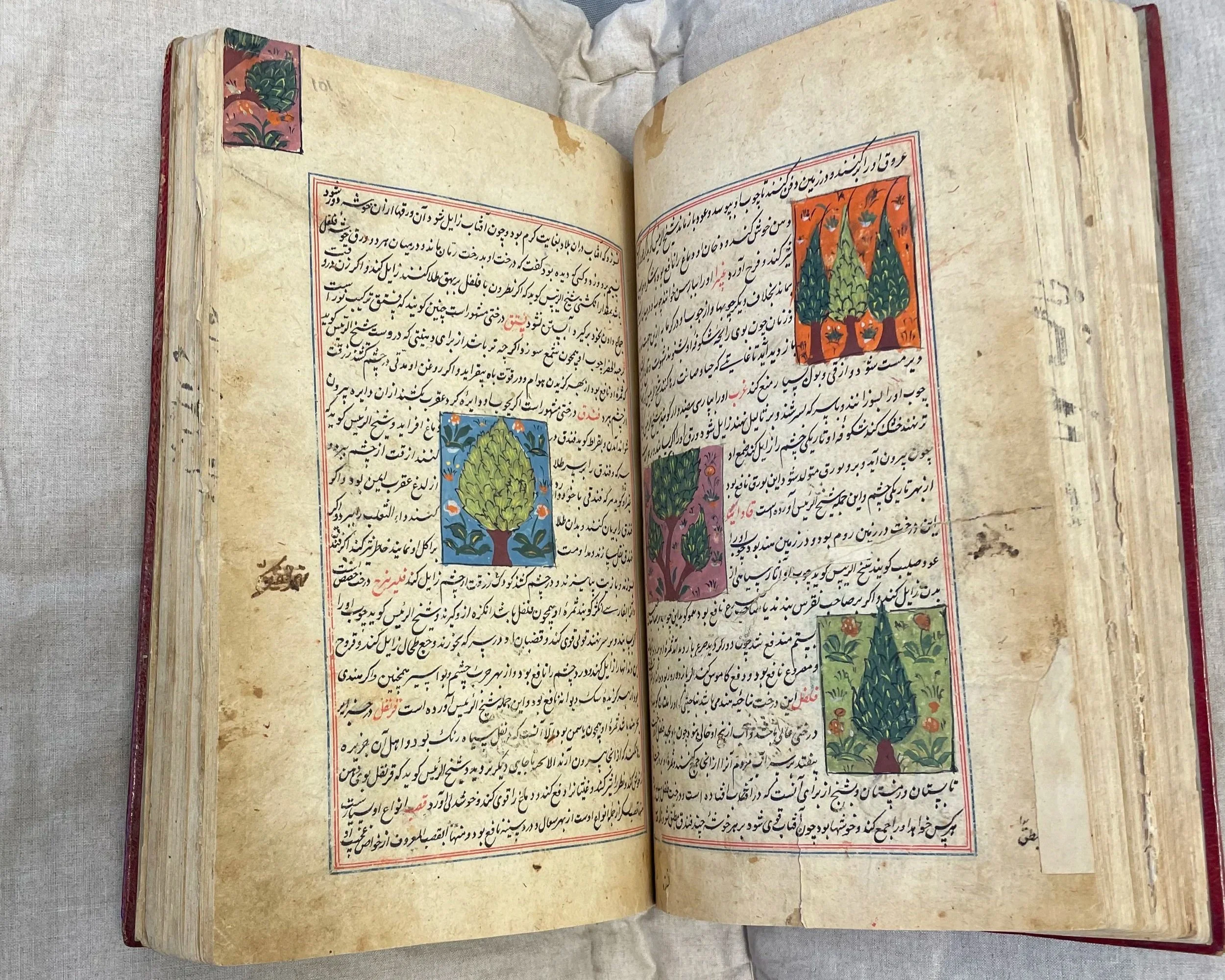
‘Aja’ib al-makhluqat (Wonders of Creation), 1613-14 CE
-
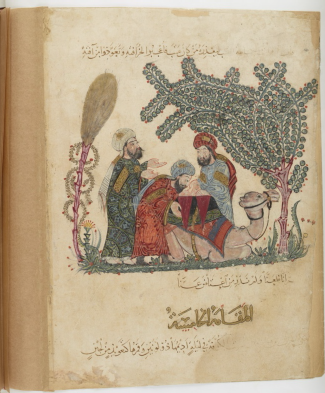
Maqamat of al-Hariri, 13th C
-
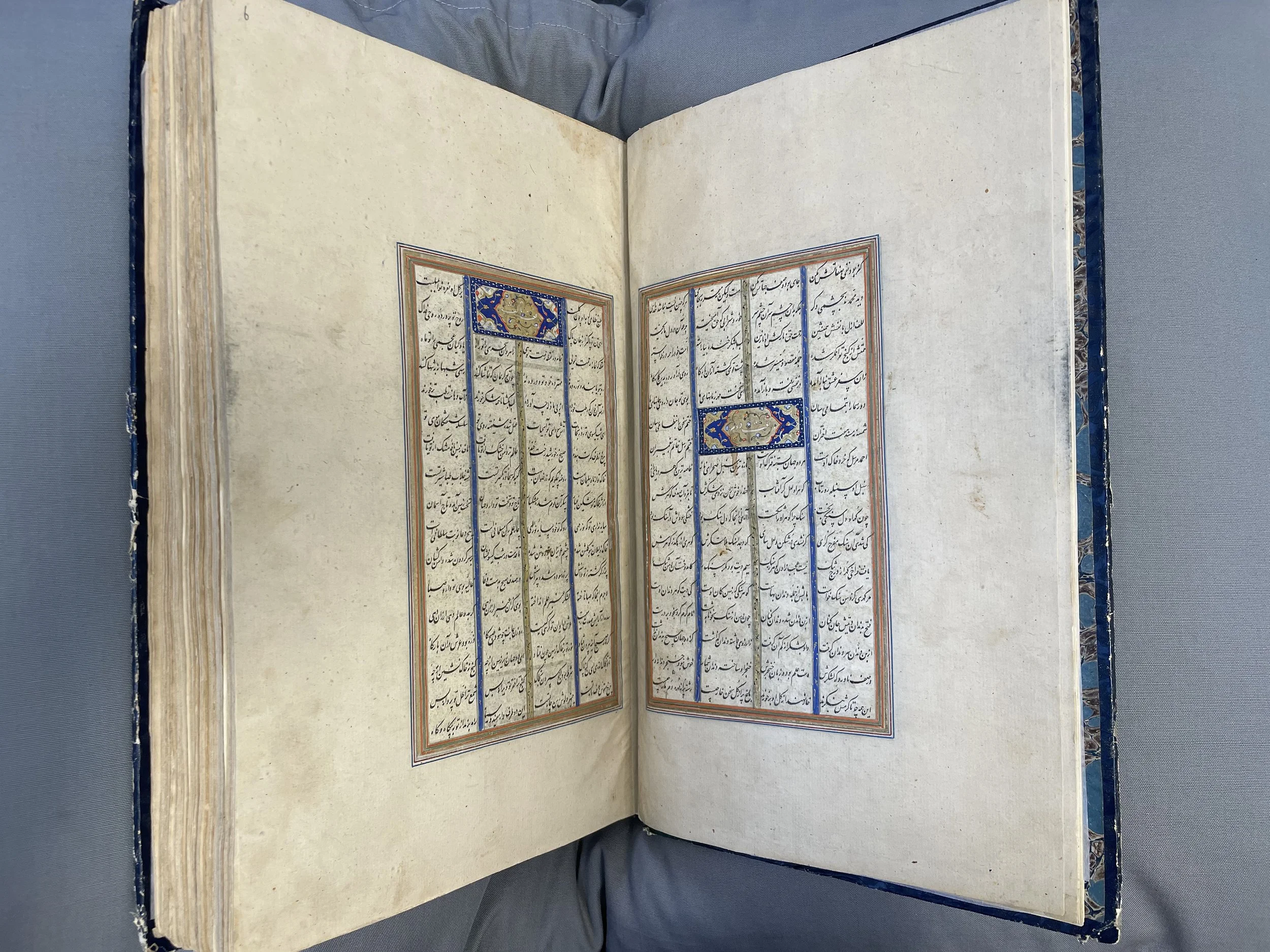
Khamsa (Quintet) of Nizami, 17th C
-
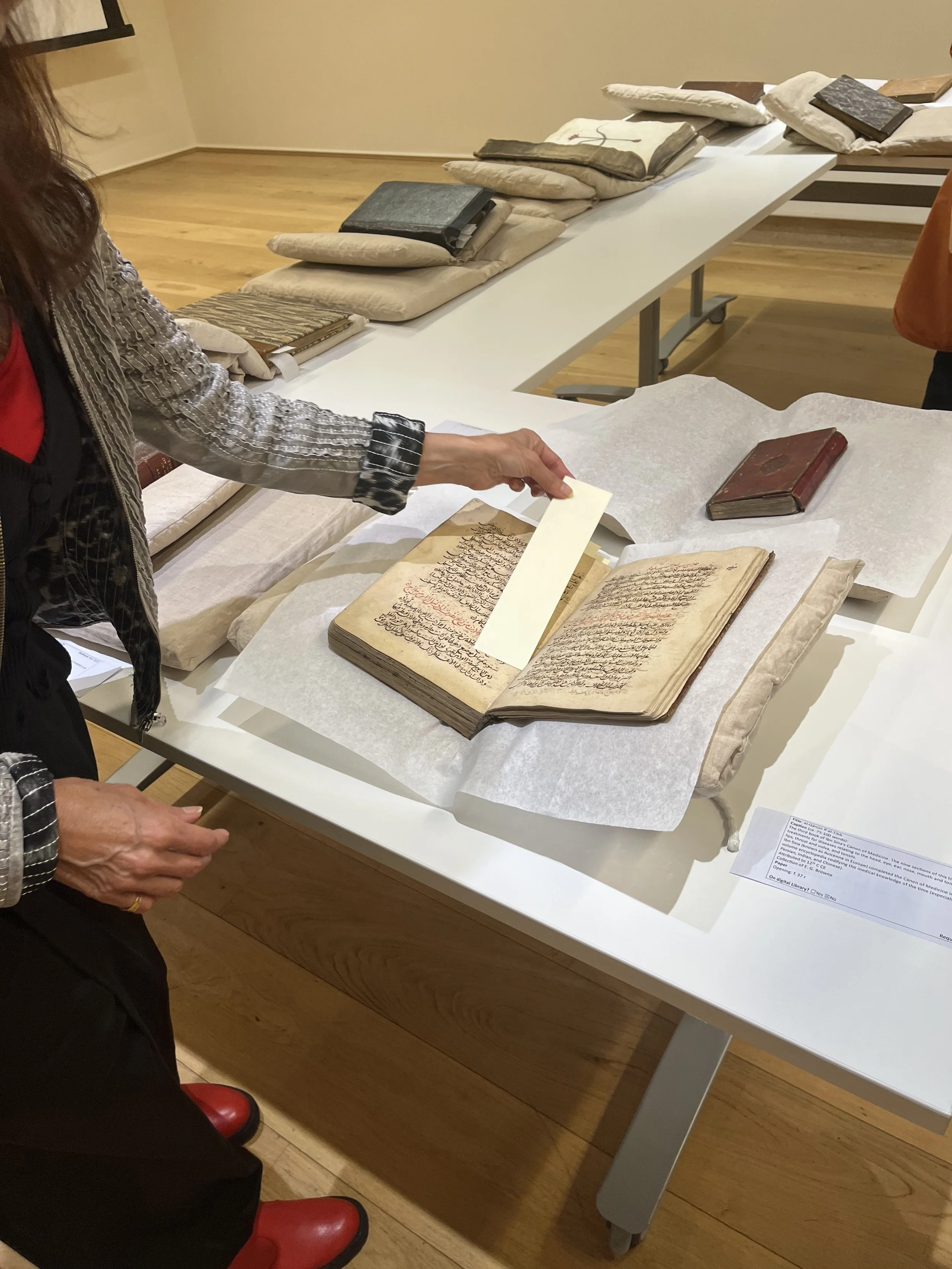
Al Qanun fi al-Tibb (Canon of Medicine), Ibn Sina, 12th C
-
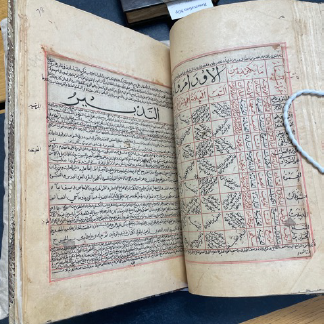
Taqwīm al-adwiyah al-Mufrada (The Almanac of Simple Drugs)
-
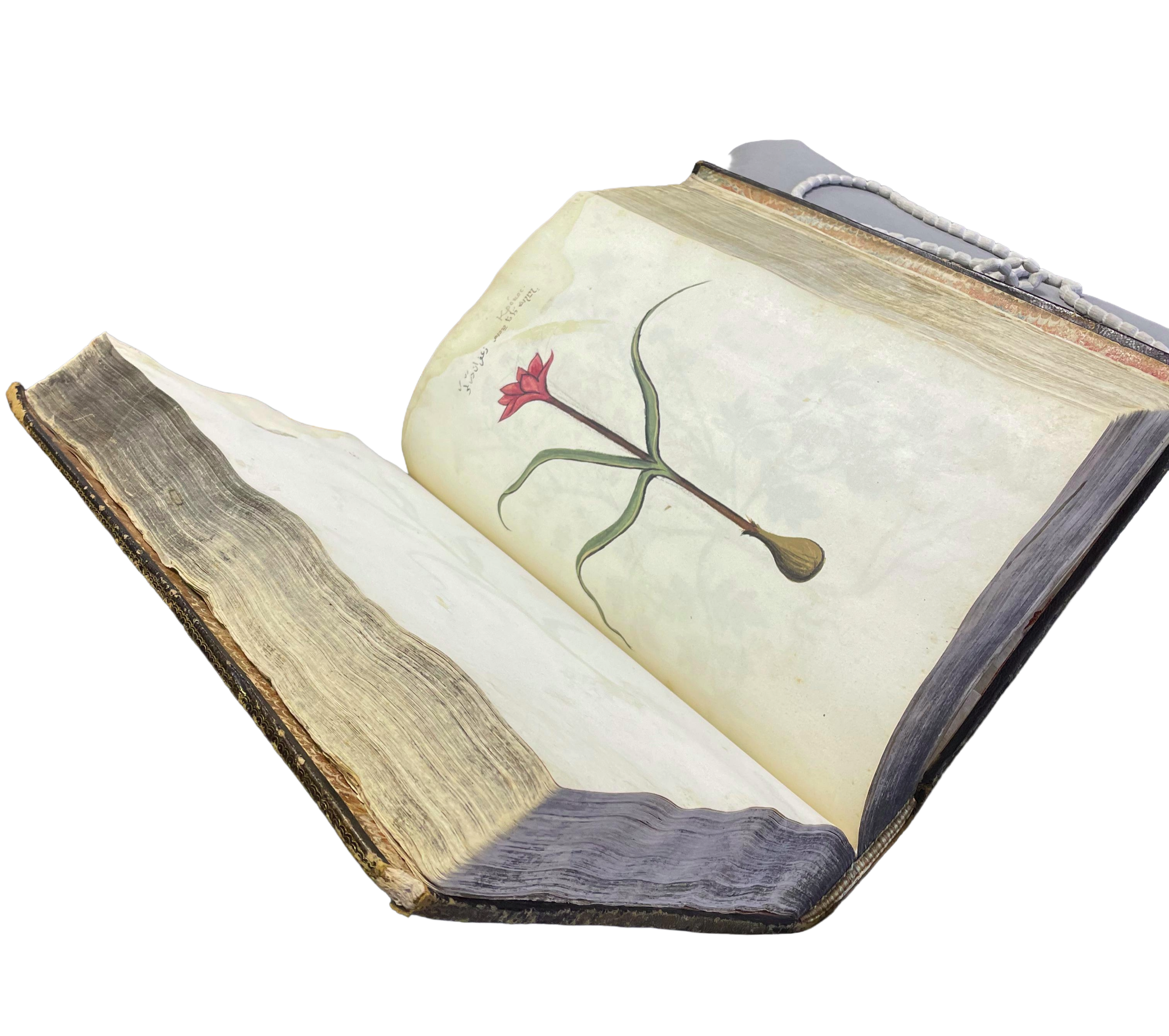
Herbal, 1682 CE (saffron illustration)